 fairfits.co
article · bed frame size · 6 min read
How much bigger than the mattress is a bed frame?
A bed has a habit of growing after you choose the mattress. The size name reflects the mattress footprint; the assembled frame is what your bedroom actually has to hold.
Queen is the mattress, not the furniture
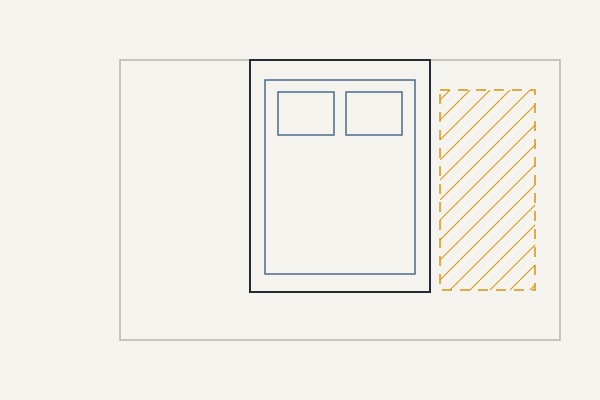
“Queen” tells you the mattress size. It does not promise that every queen bed occupies the same patch of floor.
Start with a 60 × 80 in mattress. Then look at the frame’s assembled outside width and length. A simple platform can stay very close to the mattress footprint; thicker side rails, upholstery, a footboard, or an oversized headboard can push the furniture beyond it.
That difference matters because bedroom clearance starts at the outside edge of the frame, not the edge of the mattress sitting inside it. If you planned the room around the mattress alone, every inch the frame adds comes straight out of the walking space you thought you had.
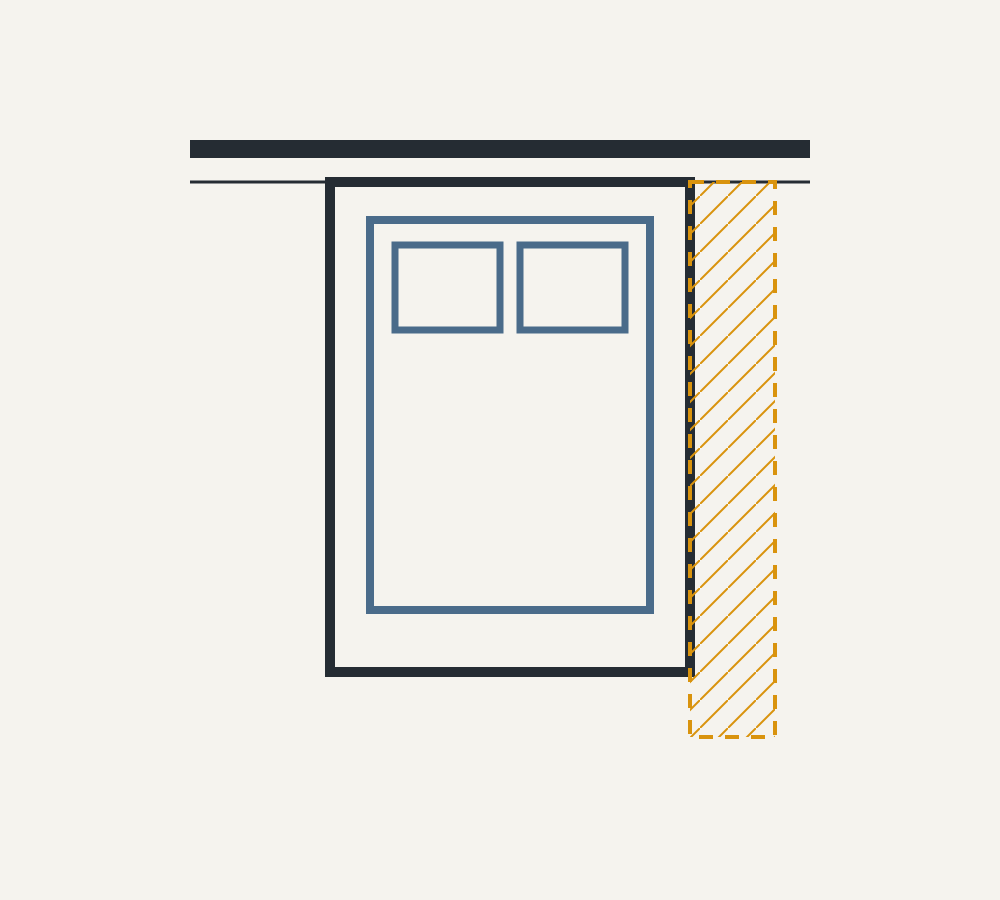
The Mellow frame does not extend past the nominal mattress footprint, so the mattress remains the governing rectangle. The Modway frame does—same mattress name, different room. The comparison below is product-specific editorial arithmetic, not a standard frame allowance.
Add the frame before you add the clearance
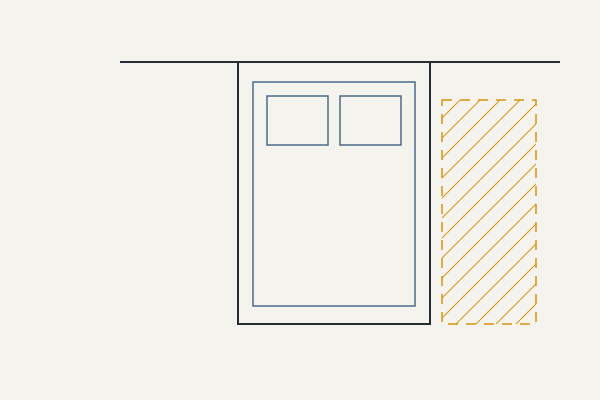
The smallest-room calculation is simple when the frame adds nothing: mattress width plus the clearance on both walking sides, then mattress length plus the clearance beyond the foot.
For a queen with two usable sides, start with the mattress footprint and add the required walking space around it.
Once a frame extends past the mattress, replace the mattress footprint with the frame footprint and run the same calculation again. The clearance rules do not change. The rectangle they start from does.
For the larger upholstered frame, the editorial working below shows what happens when its outside footprint replaces the mattress as the starting rectangle.
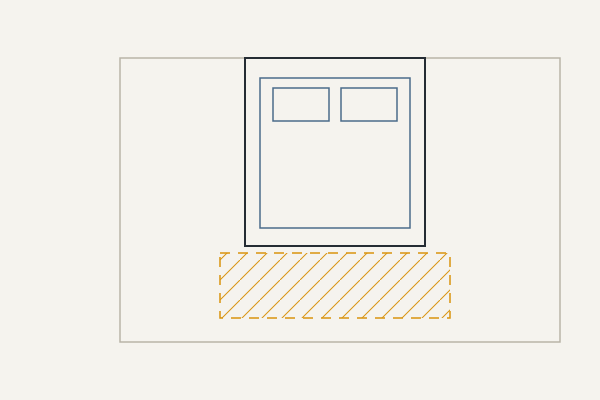
Below that, the bed may still physically fit inside the room. What disappears is the floor around it: a bedside route tightens, the foot passage shrinks, or one side stops functioning as a walking side at all.
There is no standard frame allowance
This is the part a generic bed-size chart cannot settle for you. There is no universal number you can add to a queen mattress and call it a queen bed frame.
That is because the extra size is part of the design. A simple platform may add almost nothing around the mattress. An upholstered rail has thickness. A statement headboard can grow sideways. A footboard takes up room at the end of the bed, often where a dresser is waiting on the opposite wall.
So do not add a guessed allowance to the mattress. Find the assembled outside dimensions of the particular frame.
If a listing gives only the mattress size it accepts, that is not enough for a room-fit decision. You still need the furniture’s outside width and length.
The foot is where a few extra inches hurt most
The sides usually announce trouble first because they are easy to see. The foot of the bed is sneakier.
That passage often shares the room with a dresser, a door swing, or the main route across the bedroom. The frame’s foot end therefore has to clear whatever sits opposite it before that floor counts as usable passage.
Measure from the actual end of the assembled bed. If a footboard projects past the mattress, the footboard owns that floor.
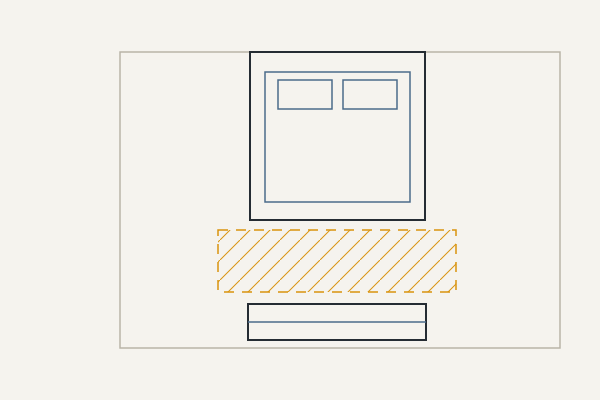
A dresser makes the check stricter. Its case depth is permanent, and its drawers temporarily grow into the same patch of floor when you use them. A room that works neatly around a mattress can become awkward once both pieces take their real dimensions.
Measure the rectangle you are actually buying
Before ordering a frame, ignore the size name for a minute and find two figures: assembled outside width and assembled outside length.
Tape that rectangle onto the bedroom floor. Then measure outward from it for the walking sides you intend to use and the passage past the foot. Include the headboard in the width if it projects beyond the rails, and include the footboard in the length if it projects beyond the mattress.
That gives you a much more useful answer than “a queen fits a queen room.” It tells you whether this queen frame fits this bedroom.
The mattress chooses where you sleep. The frame decides how much room is left when you get out of bed.