 fairfits.co
article · studio layout · 7 min read
Where the desk goes in a studio
Your desk can have a place in the room without making the whole room feel like work. Compare positions with the chair pulled out, reserve the route past it, then choose the seat that gives you a useful view without spending floor the bed or storage needs.
Count the chair before choosing the wall
An empty wall can look like an invitation to buy a desk. Measure the floor in front of it before accepting. The desktop is only the fixed part of the arrangement; the chair needs room while you sit, move back, and stand.
For a position with no traffic behind the sitter, the FairFits desk-chair rule starts at 32″, measured from the desk's working edge to the obstruction behind it. Its 36″ tier allows more room. These are the site's application of seating-clearance guidance to a desk, not a measurement of how far every chair rolls.
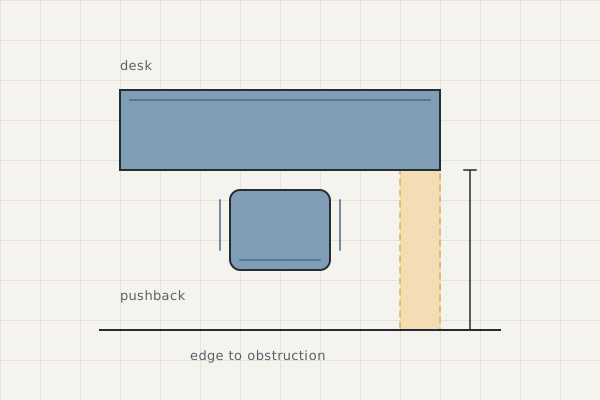
Do not add the chair's depth to that allowance as though it began at the chair back. For a wall-facing desk, add the desk's actual outside depth to the edge-to-obstruction allowance, plus any gap needed behind the desk for its fittings. Below the usable allowance, standing up can mean turning sideways between the chair and the bed.
Tape the desk footprint, put your chair at the working edge, and get in and out. Include its arms and base, not just its cushion. A drawer or apron that prevents the chair tucking under the top changes the parked position; test that too.
Choose the view from the seat
Sit at each position that passes the floor check. Where is the entrance from there? A desk facing the wall may put arrivals behind your shoulder. Turning it perpendicular to the wall can bring the entrance into view without placing the whole desk in the middle of the room.
Prefer that turn when seeing someone arrive matters to you. It costs a projecting desk end and can make the route bend around it; a tall screen may also block the view you meant to gain. Recheck the occupied chair, the passage, and the door's full intended swing before keeping the new position.
A wall-facing desk remains a good choice when turning it spends the only clear route. It can also keep the screen out of the view from the bed, although the chair and work surface will still be visible. The useful question is what you want to see from each place, not whether the desk obeys a universal orientation.
Test the screen in the light you actually work in. If the window reflects across it, try another position before committing the furniture. Keep access to shades and opening windows; the window-sided studio guide follows those competing claims through the rest of the room.
Keep the shared route outside the chair's movement
The room still needs to work while you are working. If someone must ask you to roll forward to reach the bathroom, the desk has borrowed the passage.
The desk rule's roomier tier allows someone to edge past; it does not establish a separate main walkway. Where the studio's through-route runs behind the seat, aim for 36″ of clear passage outside the chair's occupied and pulled-back positions. The rule's tighter 30″ tier comes from an unobstructed single lane, not permission to squeeze a route between a moving chair and the bed.
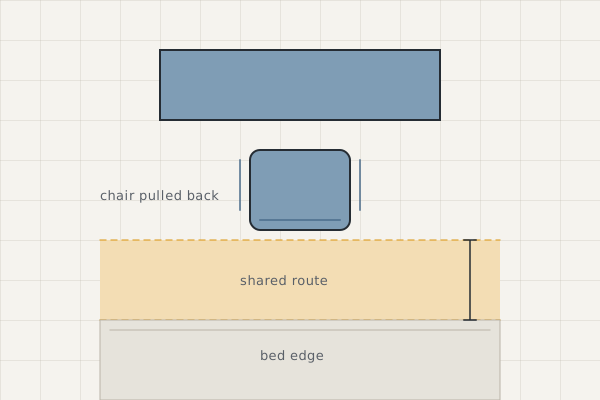
This is a conservative arrangement choice for simultaneous use, not a new combined clearance standard. Measure how far your actual chair reaches from the working edge when you get up, then check the remaining passage separately. Do not blindly add the full desk allowance to the chair depth.
If that leaves too little floor, try a wall where the chair moves into a quieter pocket and the route passes beside the desk instead. Check the turn around its end. A desk beside the bed is only a useful boundary when neither getting into bed nor leaving the chair depends on the other place being empty.
A shallow desk has to hold your work
A slim top can return floor to the room, but it cannot make your equipment shallower. Lay out the laptop or screen stand, keyboard, and the paper you actually use. Include plugs projecting behind the top and the space your hands need at its front.
The editorial comparison below holds the work setup fixed. The shallower top leaves less spare surface around it; it does not demonstrate a universal desk-depth requirement.
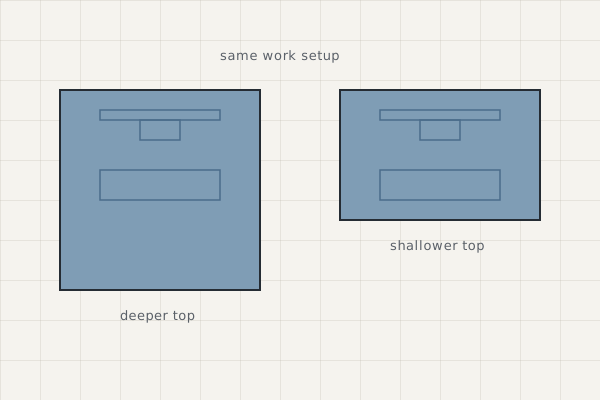
Choose the shallower desk when your normal work fits without moving essentials elsewhere. If papers migrate onto the bed every morning, the smaller footprint has not contained the activity. A deeper top may earn its place by keeping that work together, provided the chair and route still pass.
An open base leaves floor visible beneath the desk, but also exposes cables and anything stored there. A drawer can conceal small supplies while reducing knee space. Judge the desk with its contents, and check the chair under the actual base before ordering.
Try a working day in the corner
Leave the tape down and use the intended chair while someone walks the main route. Open the nearby storage, get into bed, and leave the seat with the door in its normal position. Any move that improves the view has to survive those same tests again.
Then look from the bed after putting work away. Decide where the laptop, papers, and charging leads will live. A desk that needs clearing every evening can be the right trade for a studio you enjoy outside working hours, but make that routine an intentional part of the choice.
Use the studio zoning guide to connect this working pocket to the sleeping and living areas. Mark the chair's pulled-back position on your plan, not only the desk.