 fairfits.co
article · platform beds · 5 min read
Will a low platform bed work with your nightstand?
A low bed can make an ordinary nightstand look like a tower. The useful measurement is not the platform alone but the finished height of the mattress top, because that is the surface your hand reaches from.
A platform shifts the reference height
A low platform changes more than the silhouette of the bed. It drops the mattress, your elbow and the reach beside you together.
That is why frame height by itself is a poor way to choose a nightstand. The table does not meet the frame; it meets the top of the mattress. As a planning check, this page adds the platform's listed height to an editorial mattress-thickness range to estimate where that surface may land.
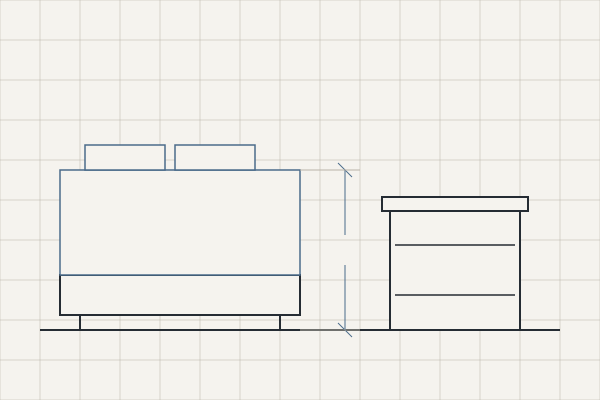
Inside that estimate, an ordinary nightstand lands close to the finished sleep surface rather than towering over it. That is the useful surprise: a low platform does not automatically require a low nightstand.
The arithmetic only gets you close, though. How far the mattress sits into the frame changes the real height, so the assembled bed gets the last word.
Keep the same band
A lower bed does not need a different nightstand rule. It changes the reference point the rule starts from.
This page uses the editorial band from How tall should a nightstand be?: keep the tabletop close to the mattress top, with a little room below it and a little more above. The rule set still has no sourced row for this relationship, so the band remains editorial rather than a standard.
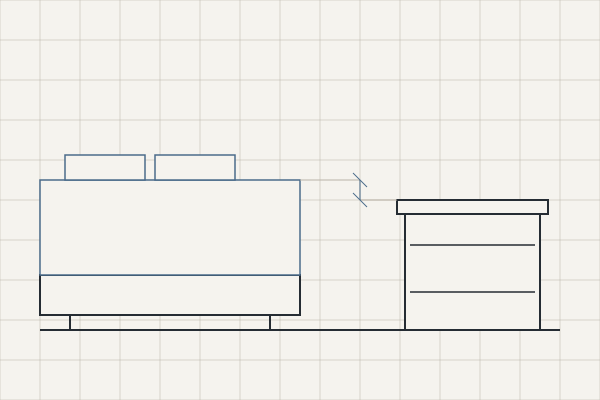
The failure is physical, not stylistic. Put the table too high and a glass, phone or lamp switch asks for a shoulder lift every time you reach from bed. Put it somewhat low and your hand drops instead.
Judge that difference from the mattress top, never from the platform.
The pairing fails when the stack grows
The platform is only the first layer. A thicker mattress or risers under the frame can lift the finished bed well beyond the height you pictured when you chose it.
Then the same nightstand changes character. A table that looked tall beside the bare platform can end up low beside the finished bed, leaving the things on top farther below your resting hand.
That is why "low platform" is not enough information to shop from. It describes the frame, not the surface you sleep on.
Change the stack and you change the pairing. Measure it again.
Measure the bed compressed
Mattresses are soft enough that a catalog measurement can be the wrong kind of precise. What matters is where the top settles when you actually use the bed.
Sit on the edge where you normally get in, let the mattress compress and measure from the floor to that settled surface. Compare the nightstand height with that number — not the unloaded mattress and not the frame alone.
If you already own the nightstand, this tells you whether the new platform will work with it. If you own the bed first, the same measurement becomes the height filter for every nightstand you consider.
Let the hub do the sorting
Once you have that measurement, style can come back in. Before that, it is choosing from the wrong set.
Take the mattress-top height to the nightstand hub and compare candidates by height first. The useful shortlist is not every table that looks good beside a platform bed. It is the group that meets your bed without making you reach conspicuously down or lift your shoulder to reach up.
A low bed does not need a special category of nightstand. It needs the right reference height.
Measure that first.