 fairfits.co
article · door fit · 4 min read
Will it fit through the door?
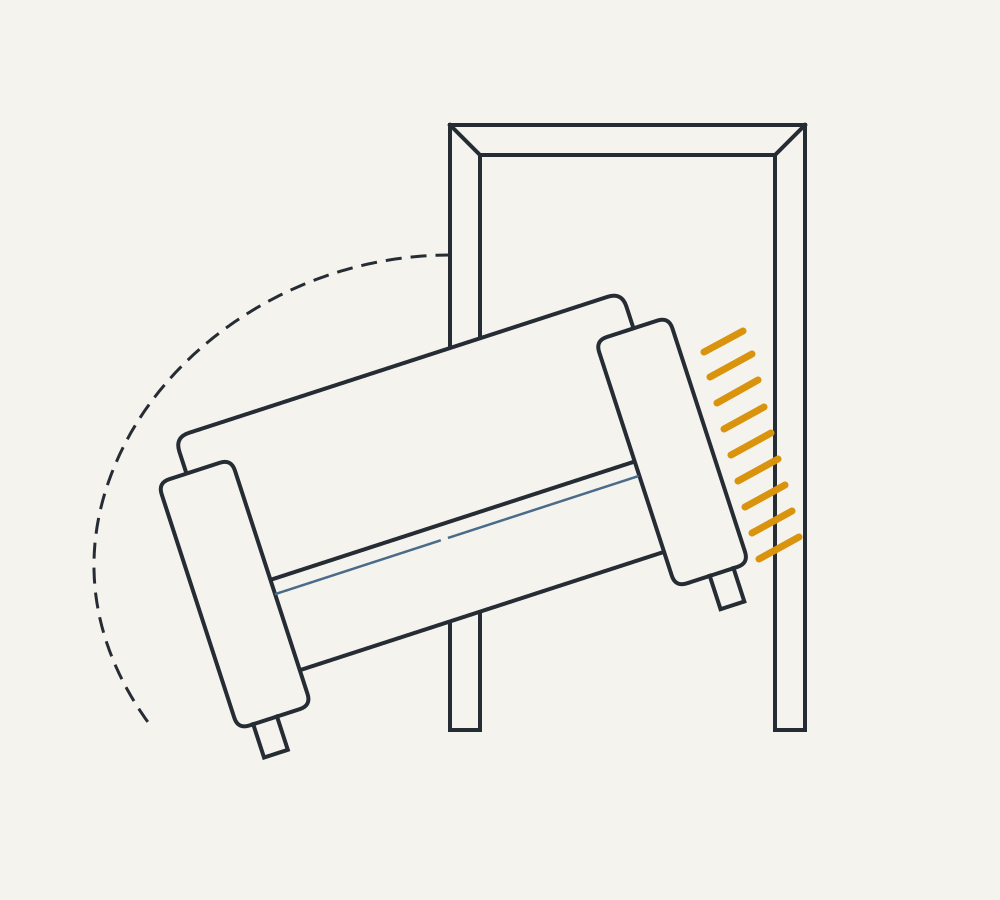
The last thing to check before a special purchase is also the easiest to forget: whether it will fit through the door. A tape measure settles most cases before you order, and one comparison does more of the work than you might expect.
First, measure the opening — not the door
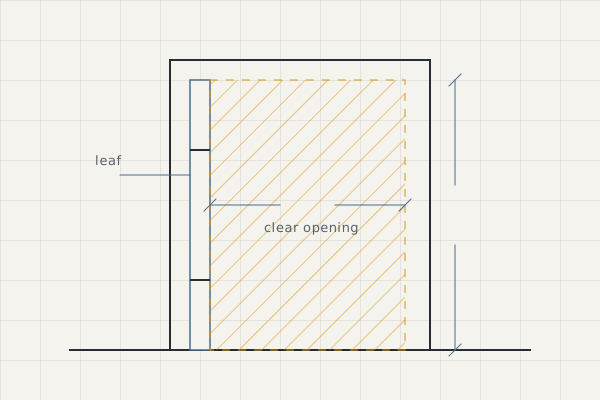
The number on a floor plan describes the doorway; the number that matters is the clear opening after the hung door leaf and its hardware have taken their share. Open the door fully and measure the gap you could actually pass something through.
If the leaf can come off its hinges on delivery day, measure again without it. That is often the cheapest clearance you will ever buy.
Boxed and assembled are two different tests
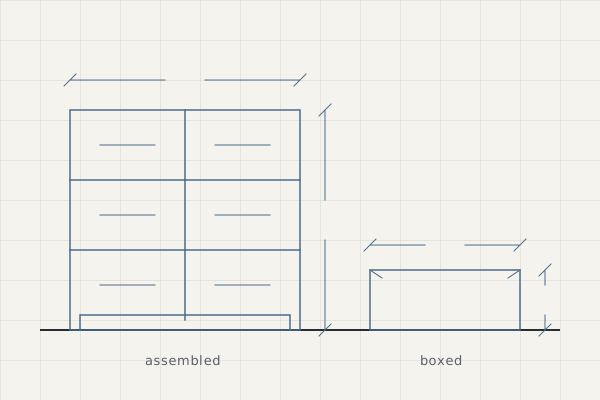
Every candidate piece can have two useful sets of dimensions: the carton printed on the listing and the assembled envelope the product page may make harder to find. They are different delivery problems, so first decide which one will actually make the trip to your room.
Sort the three dimensions — the door only sees two
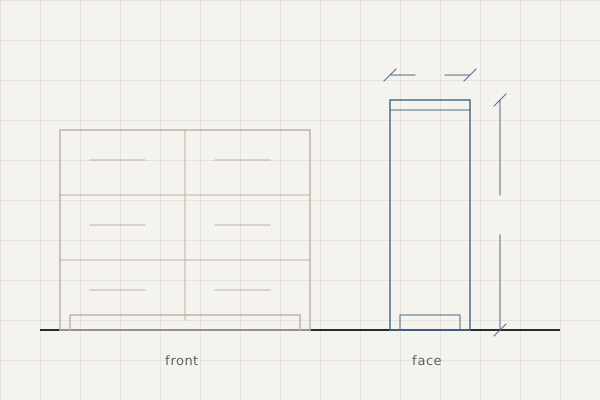
Start by sorting the piece’s length, width, and depth from largest to smallest. Send the longest dimension through the doorway and the other two become the face the opening has to accept.
That turns a three-dimensional worry into a flat comparison: one rectangle through another. It is also the step every eyeballed attempt skips.
The one-number kill rule
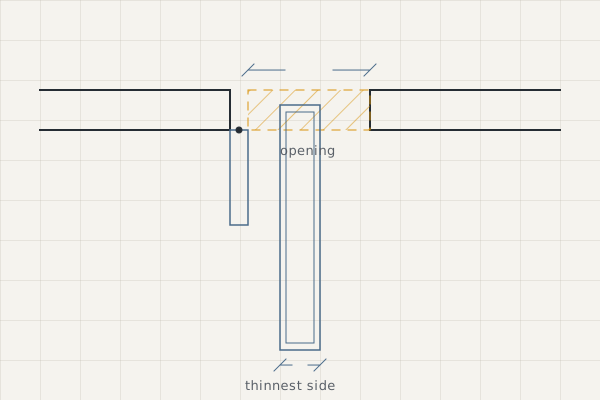
Before any cleverness, compare the piece’s smallest dimension with the opening’s shorter side. If the piece is thicker than that opening is wide, stop. No rotation can make a rigid object narrower than its own smallest dimension.
This is the useful failure test because it settles the impossible cases immediately. Do it in the store and you may never need the rest of this page.
The diagonal trick, and where it lies
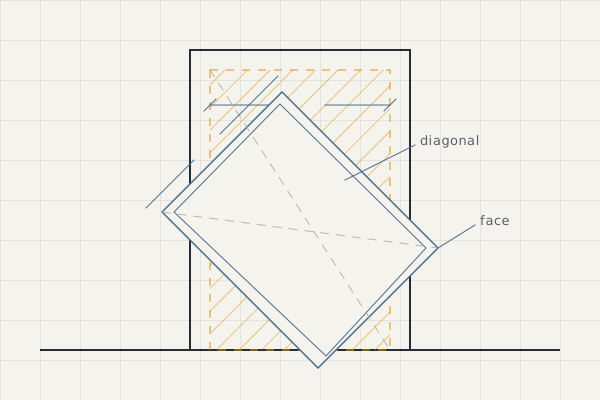
The folk method compares the face’s diagonal with the opening’s diagonal, and it is worth computing because it gives you a quick check by hand. But it over-promises.
A diagonal that fits through another diagonal does not prove that the two rectangles can occupy the same opening at any useful angle. Treat a tilted pass as possible, never guaranteed. And even when the doorway geometry works, turning a rigid piece into that position needs approach room on both sides — something no product-page formula knows anything about.
Stairs, landings, and tight turns
There is no neat formula here, deliberately. A plausible-looking answer about a stair turn is worse than no answer.
Measure the landing against the piece’s footprint, then make a cardboard cutout of the cross-section from the sorting step and walk the route with it. Test the doorway, the hall, the turn, and especially the landing.
That pivot is where assembled pieces die. If the cutout cannot make the turn, do not count on two delivery people finding an angle that the measurements somehow missed.