 fairfits.co
article · coffee tables · shape and material · 5 min read
What coffee table goes with a sectional?
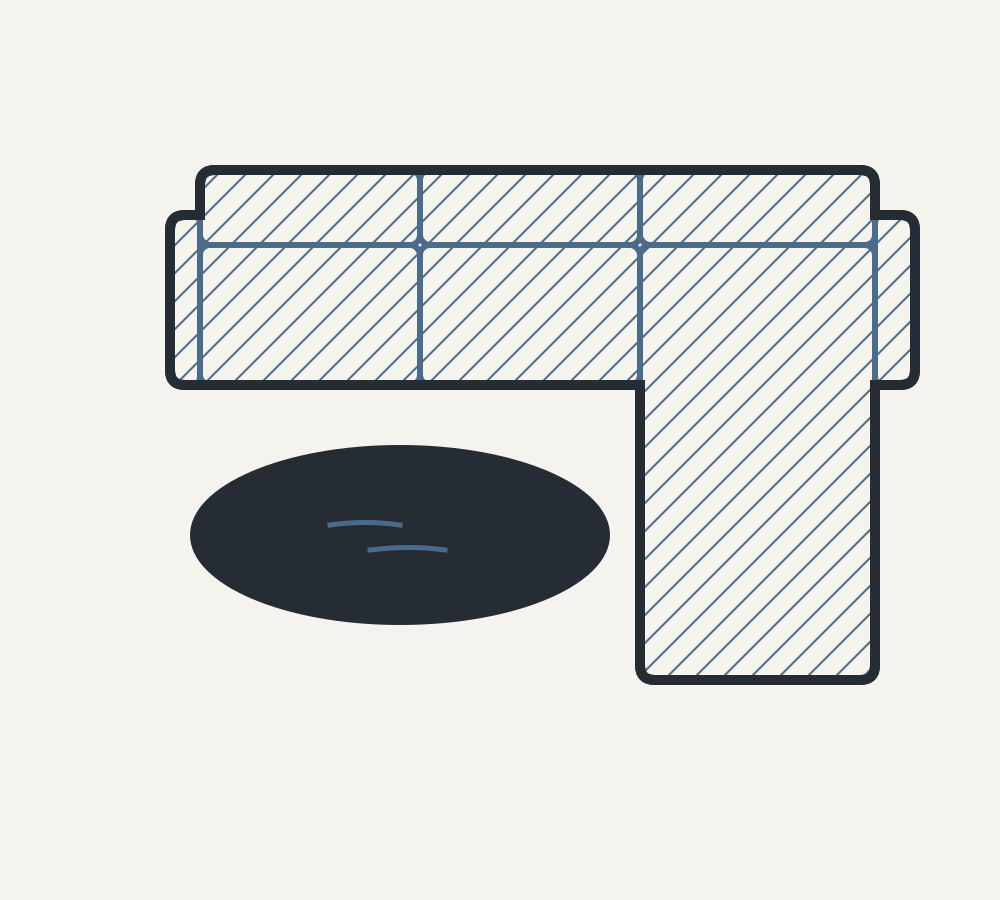
An upholstered sectional is a generous place to settle. Beside its broad cushions and square arms, try a low oval walnut table with a substantial top and broad pedestal supports.
Give the L a long curve
The cushions divide the sectional into rectangles. The chaise carries one of them farther into the room. An oval gives this arrangement one continuous curve, with enough length to follow the main seating run. Set the table with its long edge toward the seats. At the chaise end, a narrow strip of rug comes into view and widens as the wood curves away.
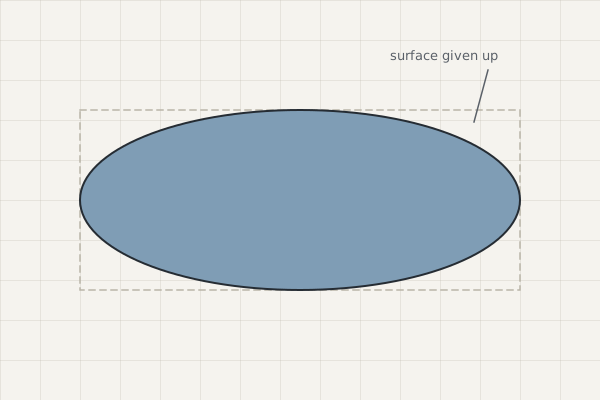
Curving the ends gives up the corners of a rectangular top with the same overall dimensions. That matters most to the person on the chaise. The bit of tabletop you lose may be just where you would have set down a glass.
This editorial surface check uses the outline as a guide. Cut the proposed oval from cardboard and lay it on a firm surface. Open the book you usually keep on the table and set a coaster beside it. If the coaster only fits at the broad middle, see whether you can reach that spot from the chaise before choosing the table.
Put timber beside the upholstery
From the doorway, what you see of the walnut is a dark oval against pale fabric. From your seat, you can follow the grain along the top. A thick edge gives you a little of that view even when an open book covers much of the surface.
Choose the finish beside the things it will actually meet. Lay a sample on the rug near the front of the sofa and look at it under the lamp you use in the evening. A quiet rug makes the grain easy to pick out. With a stronger pattern, you may find that what you like best is the dark edge running across it. If a tray lives on your coffee table, put it on the cardboard too and see how much wood you’ll get to enjoy.
Give the curve a substantial base
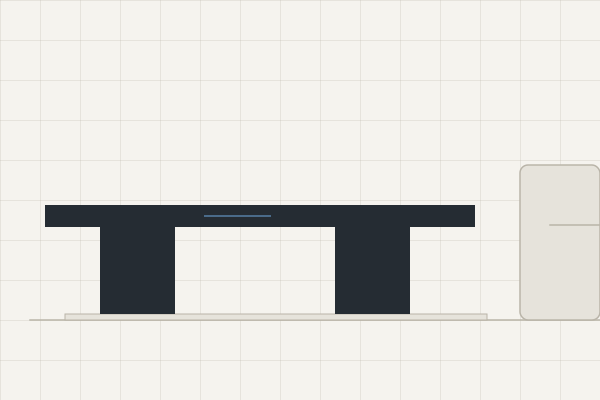
Look at the table from the long side. The thick top extends a little past each pedestal, and the two broad supports carry its weight down to the rug. Beside the deep cushions of a sectional, that much timber gives a low table some presence. Leave the space between the supports visible. The rug disappears behind one pedestal and shows through again in the middle.
This editorial compatibility check starts with the side view. That view is worth finding in the product photographs. Two tables with much the same oval top can give your feet quite different places to go. A broad support near the end can meet your toes as you turn to get up from the chaise. Mark the actual pedestal positions beneath the cardboard, using boxes to stand in for their width and depth. Try getting up from your usual seat. If you have to draw your feet around a box each time, look for a base with more room at that end.
Check the pairing where you sit
Set the cardboard at the proposed height on stable supports and let the seat cushion settle under you. Start with the gap at the main seats, measuring straight out from the front cushion to the nearest edge of the oval at its widest point. Use the reference band in the coffee-table gap guide. Too close and the edge catches your shins as you stand. Too far and setting down a cup can bring you forward off the cushion.
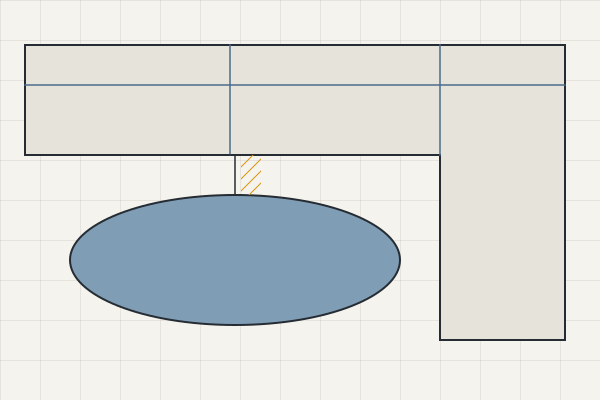
Take the chaise separately. Stretch out as you usually do and reach for the coaster. Moving the table toward that hand may put its end in the path around the chaise. Check the narrowest part of that route, aiming for 36″, and open any nearby door through its full swing.
Leave the mock-up in place for an evening. If you keep moving the coaster to the same spot, mark it on the cardboard. That’s a useful piece of the table to have within reach when you settle on its final position.