 fairfits.co
article · reading corners · small rooms · 8 min read
How much space do you need for a reading corner?
A reading corner earns its name when you keep going back to it. Give the chair room for the way you sit, put the light within reach, and leave the route past it open while someone is reading.
Start with the chair and the floor in front
There is no single room size that makes a reading corner work. You need the chair’s full outside footprint, space to get into and out of it, and a place for the light. Where people walk past, their route must survive the chair being occupied.
Mark the chair’s outside width and depth on the floor, including its arms and back. Then try the sitting position: feet down, legs stretched out, or feet on a stool. Those choices spend different amounts of floor. A chair can fit neatly between the walls while your knees occupy the only way through the room.
For a short passage between furniture, allow 24″ at minimum, with 30″ recommended. That is a passage-width check, not a sit-and-stand allowance. Aim for 36″ on the main route through the room, measured from whatever projects farthest into it during use. These planning figures do not establish accessible use; allow the space your own movement requires.
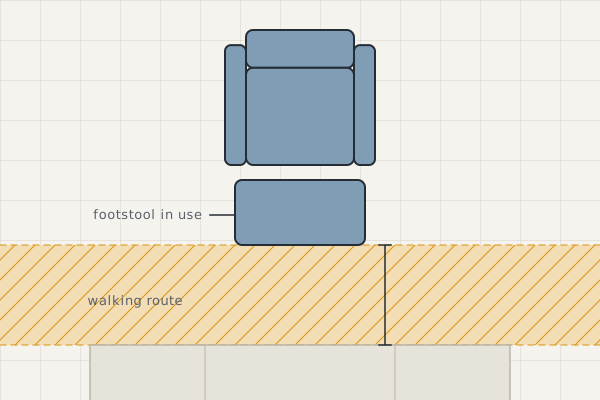
The approach to the chair can also be the floor where you stand up. It does not need to be counted twice. But if that same floor is the room’s main route, someone should be able to pass while you are settled in the seat. Mark the overlap before deciding the corner is available.
Choose which way the chair faces
A chair pushed squarely into a corner may save a little floor and leave you looking at the back of the room. Turning it toward a window or the rest of the seating gives the position a purpose: somewhere to look up from the page, or a seat that can join a conversation.
Try the view from sitting height. A window beside the chair may be more useful than one directly ahead if the bright glass makes the page uncomfortable to look at. The aim is a position you want to stay in, with a front edge you can reach without squeezing around an arm.
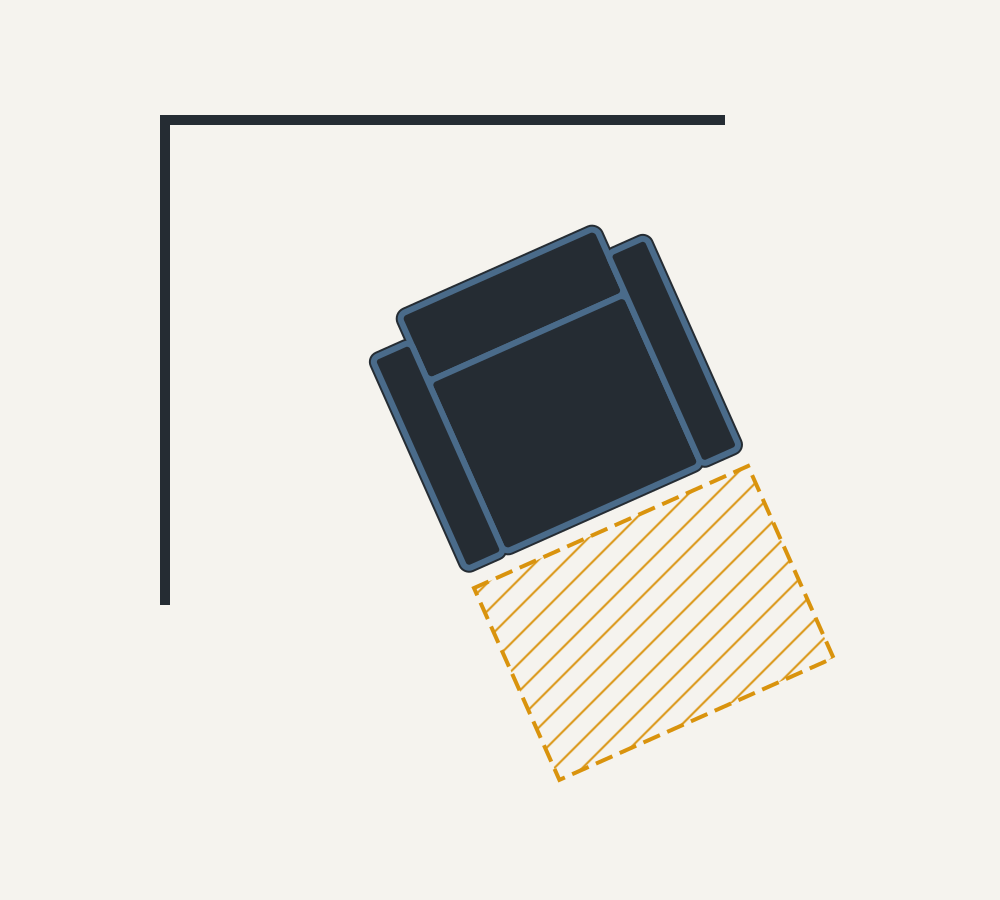
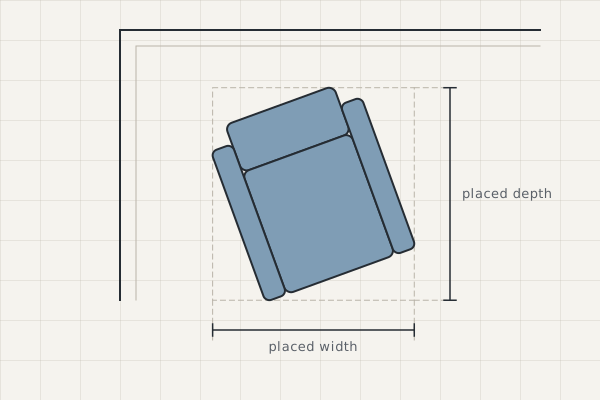
The angle has a cost. The back and arms now project differently along the walls, so tape the rotated outline itself rather than measuring the listed depth straight out from the corner. Open any nearby door fully. If an arm reaches into its sweep or forces the walking route to bend around you, reduce the angle or move the chair to another wall.
Count the footrest when it is out
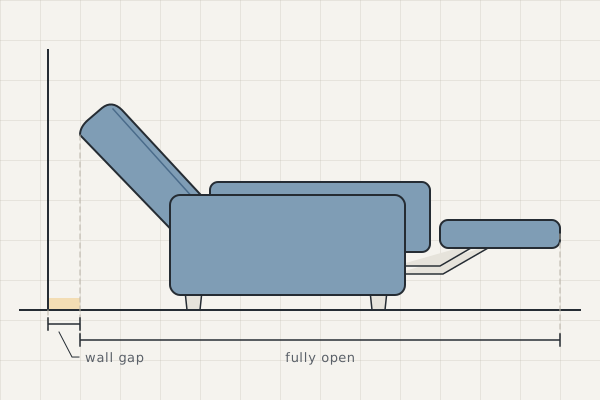
A reclining chair occupies more room than its upright photograph suggests. Find the exact model’s fully reclined dimensions and required distance from the wall, then check the movement between closed and open. There is no universal allowance to add to the listed depth.
A separate ottoman offers more freedom to place your feet, but it needs somewhere to stand while you enter the chair. A swivel lets the seat face different parts of the room, provided the arms and back clear the surrounding furniture throughout the turn. Neither earns its place from the parked footprint alone.
Choose the movement you will actually use. If you read with your feet down, a fixed chair may leave room for a useful side surface. If stretching out is the point, reserve that floor before adding anything else. Try the actual chair when possible: a taped outline can check the room, but it cannot tell you whether the seat supports you comfortably.
Place the light from the seat
Position the lamp while sitting as you would to read. Try it beside and slightly behind a shoulder, then adjust it until the page is lit without the bulb shining into your eyes or your head casting a shadow over the book. Reach for the switch before settling on the position.
The lamp’s slim stem can conceal a surprisingly broad base. Mark that base, check where the shade reaches, and keep both out of the space you use to enter or lean back. Run the cord toward the outlet without crossing the walking route. If the base will not fit, a wall-mounted light may free that floor, provided the wall and power arrangement suit the fitting.
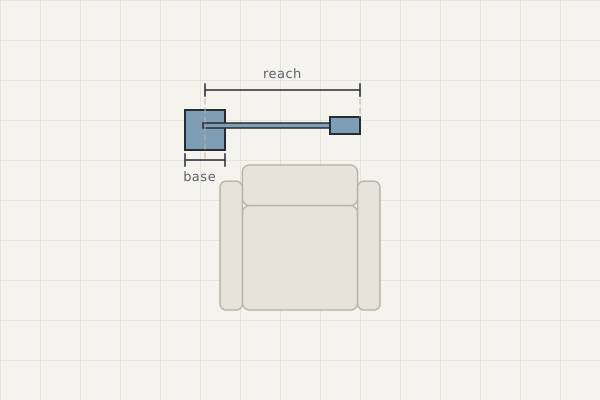
A floor lamp also gives a low chair a taller companion. The pair can hold the corner visually without shelves or a plant filling the space above it. Keep the lamp when it earns that role and puts light where you need it.
Add a surface only where you can reach it
A place for a drink or an unfinished book makes the chair easier to use. First try a surface already beside it. If you need a separate table, put it where you can reach from the seat without blocking the approach; include its top, base and any projecting legs in the floor check.
Let the chair supply the comfort and much of the corner’s character. An open frame exposes floor beneath the seat, while fuller upholstery gives it a more substantial presence. The accent-chair guide compares those choices; neither appearance excuses a footprint that crowds the route.
Before ordering, mark the complete arrangement and walk past it with the footrest or ottoman in use. Then try getting into the seat, reaching the light and putting down a book. If those ordinary movements need repeated rearranging, remove an accessory or choose a different chair. When seating still asks too much of the floor, the corner-space guide offers other uses for the spot.