 fairfits.co
article · extra seating · living room layout · 8 min read
Where does one more chair go?
The sofa can be full before the evening has really started. Try the extra chair at the sofa's end farther from the entrance, facing into the group, and check the way in before committing to the spot.
Start with the sofa you already have
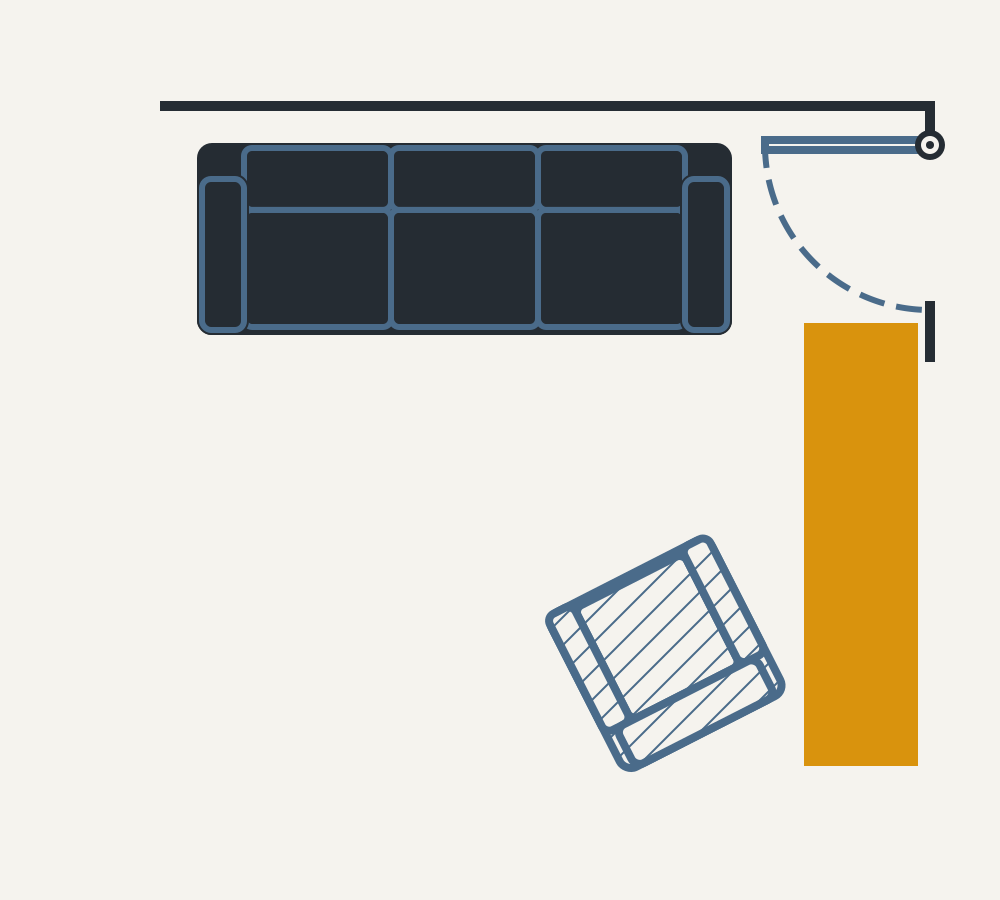
An extra chair joins an arrangement that is already doing several jobs. Keep the sofa's usable seats, the table and the route past them in the picture. The sofa-size guide works through that floor allowance; adding a chair should not quietly spend it again.
Try the chair beside an end of the sofa, turned toward the people sitting there. That gives the new seat something to face and keeps the conversation across the open part of the group. Mark its full outside outline, including the arms and back. When you angle it, mark the turned outline itself: its listed width and depth no longer describe how far it projects along the walls.
The end farther from the entrance is a useful first attempt. It still has to leave the chair reachable and any route beyond it open.
Leave room for the first step
Open the door through the range you use. An arm or back that stops the leaf rules the position out, even if the chair looks comfortably beyond the doorway when the door is shut. Use the actual leaf and check its movement; a doorway's clear opening is not the door's swing radius.
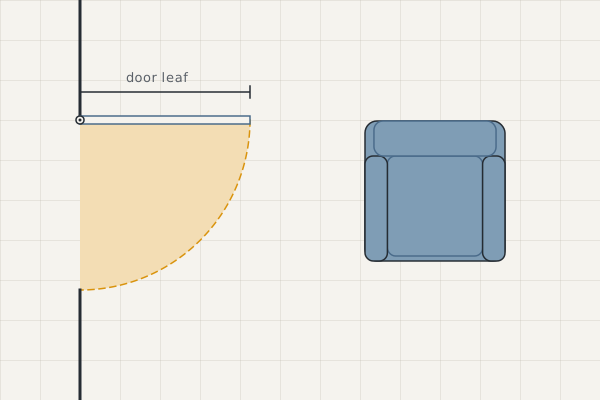
Then take the next step into the room. A chair can clear the swing and still greet every visitor with its back. Between positions that leave the door and the main route usable, prefer the one that lets you enter before turning toward a seat. This is why the far end of the sofa often earns the chair first.
Aim for 36″ on the main route, checking its narrowest point with the chair in position. The tighter 30″ reference describes an unobstructed single lane; it is not blanket approval for squeezing between furniture. If someone has to slide the chair aside whenever a guest arrives, try another position or another chair.
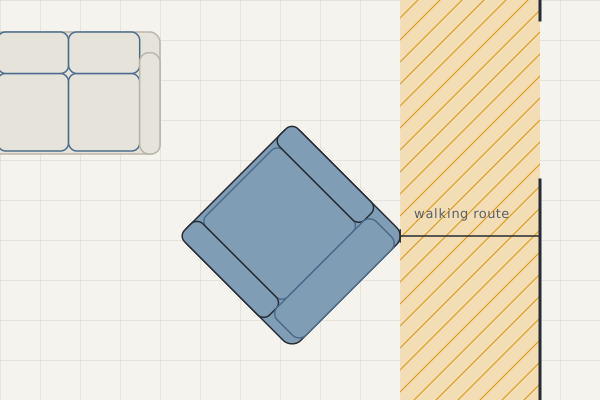
Moving the chair away from the entrance can put it farther from the conversation, or leave someone facing the back of the open door. Turn the seat toward the sofa and recheck the new outline. Where the far end blocks another route, a turn at the entrance may be the better compromise, provided the passage remains usable. A straight arrival is a preference, not a reason to block something else.
Keep the seat approachable when the room is occupied
The empty chair is only part of the arrangement. Someone has to reach its front, sit down and get up while the sofa is occupied. The reading-corner guide makes the same distinction between the chair's footprint and its use.
For a short passage between substantial pieces, the reference is 24″ at minimum, with 30″ recommended. That describes the passage beside the furniture, not a universal allowance in front of a seated person's knees. If it is the main way through the room, use the primary-route check instead.
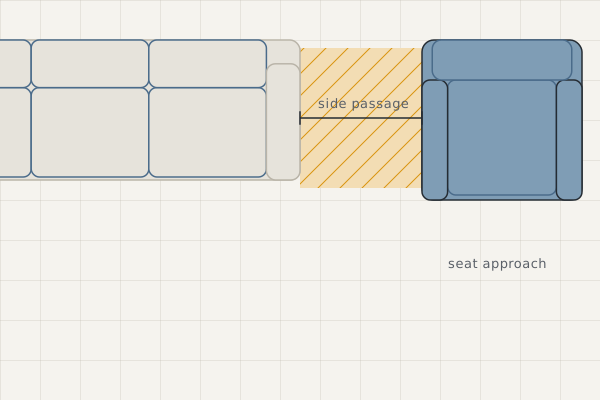
Try the arrangement with someone on the sofa and someone in the chair. Walk in, take a seat and stand again. Floor used to approach the chair can also serve the act of sitting down, but it cannot remain the only way past if the seated person's legs block it. Leave the route usable for the people who will share the room.
Choose the chair in relation to the sofa
Beside a sofa with broad arms and upholstery close to the floor, an open-base chair reveals a break beneath the cushions. An armless chair interrupts the bank of upholstery at seat level. Both can give the group a lighter edge; neither increases the measured passage, and the armless seat gives up somewhere to rest an elbow.
The opposite choice can be useful. A substantial upholstered chair gives a slight sofa a stronger companion, while a rounded back interrupts the sofa and table's straight lines. Let the curve remain visible instead of burying it between pieces, and measure from its widest point. The accent-chair guide compares these shapes in more detail.
Compare the seats as well as the silhouettes. Sit in each and notice the height, cushion compression and how far you lean back. A low lounging chair beside an upright sofa may suit stretching out but leave its sitter looking up at the people on the sofa. There is no universal matching height to apply here; choose the difference deliberately.
A swivel can turn from the sofa toward the open room or a window. Its arms and back need room throughout that turn, including the positions people leave it in. Keep it only if the route survives those positions too.
Make the last check with guests in mind
Before ordering, mark the chosen chair in its intended position and rehearse the room with the seats in use. Check the arrival, the approach to each seat and the way through to the next room. Try the actual chair for comfort when possible; a footprint cannot tell you how it feels to sit there.
If the extra seat depends on someone getting up every time another person enters, change the position before accepting a smaller chair as the answer. If neither end works, leave the purchase until the arrangement gives it a usable place.