 fairfits.co
article · bedroom rugs · 6 min read
Rug pile height: the trip line beside the bed
A soft landing is a good reason to put a rug beside the bed. Choose its pile with the walking route in mind, because the edge, backing, and pad determine what your feet actually cross.
Check more than the pile
Pile height describes the fibers above the backing. It does not tell you the whole height above the floor: the backing and any separate pad add to the assembly, and the bound edge may have a different profile again.
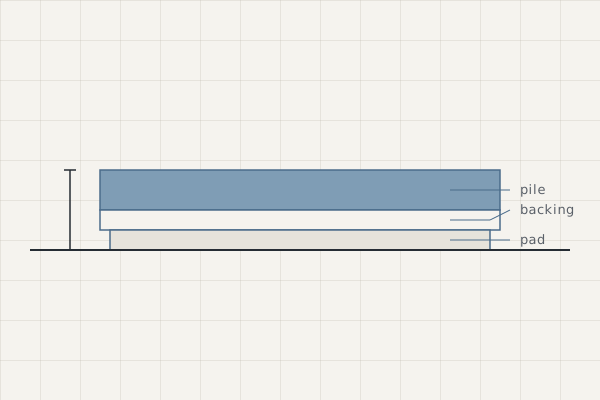
A low-pile label is a useful starting point, not a promise that the rug will lie flat. Ask for the total thickness, look closely at the finished edge, and check whether the corners curl or the rug shifts. A thin rug that bunches still puts a ridge in your route.
This page does not set a universal pile-height cutoff for bedside use. The useful check is the finished rug on its intended pad, where you plan to walk.
Keep the walking band usable
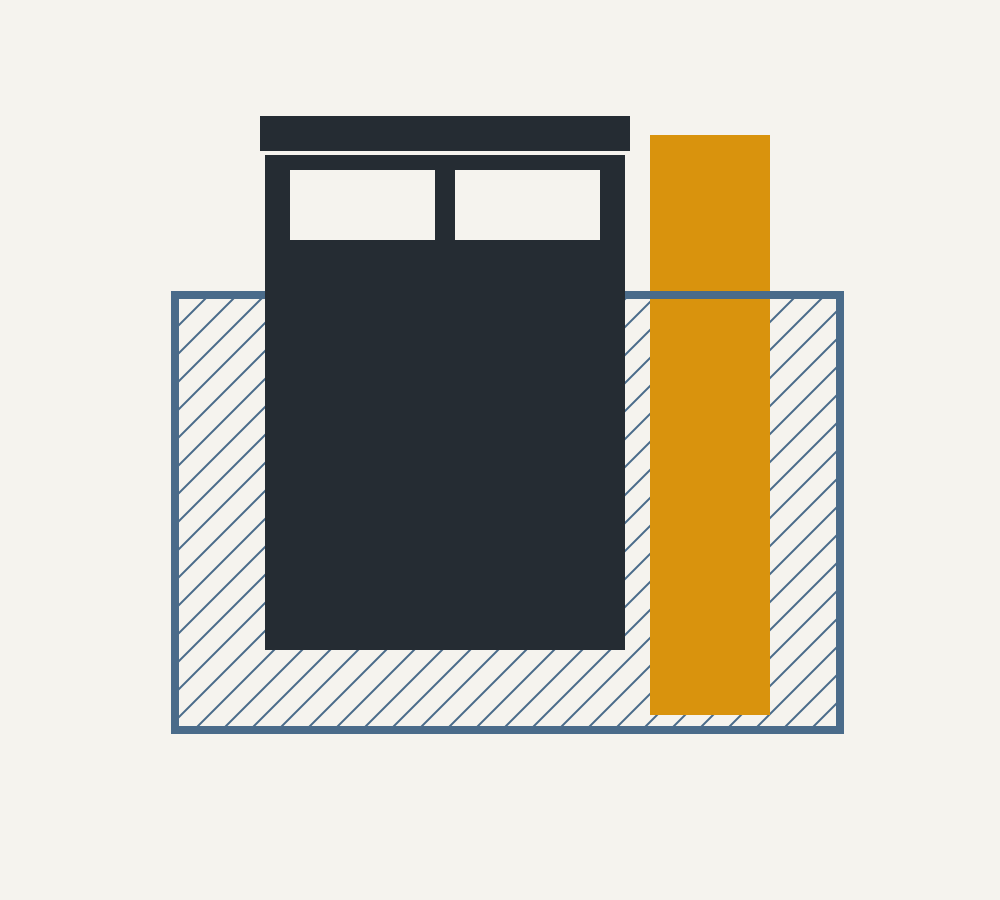
The exposed rug can occupy the same floor you use to walk beside the bed. You do not subtract its width from the passage as though it were another piece of furniture. Measure the gap from the bed’s outside edge to the wall or furniture opposite, using the site’s bedside guidance.
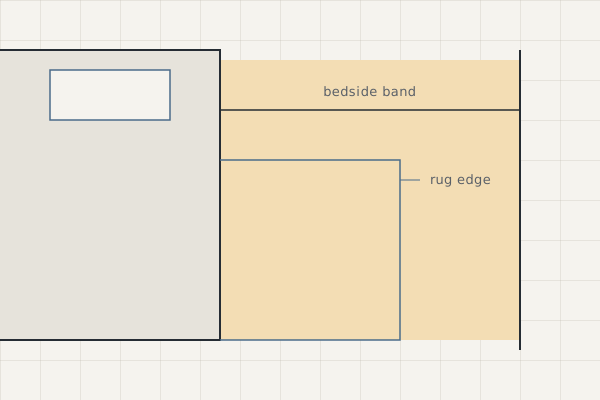
Below the minimum, passing the bed and making it become cramped. Meeting that width still leaves the rug edge to check: a corner can sit exactly where you turn toward the door, even in a generous passage.
Mark the rug’s outline and follow the route from your side of the bed to the exit. Prefer a position that keeps a raised edge away from the turn or the place you step down. Moving it may reduce the visible border elsewhere; the rug exposure guide helps you judge that trade-off.
Choose what the texture contributes
A deep pile can give a spare bed frame a softer base. Its uneven surface breaks up the frame’s straight edges and makes the exposed rug a more substantial part of the room. That is a reason to consider it, provided the finished edge and everyday route work together.
For a narrow bedside passage, this page favors a flatter construction with a stable edge. You give up some plushness, but can still introduce pattern, color, or a visible weave without building a deeper border around the bed. A flat weave still needs checking for movement and curled corners.
Layering adds another edge and another surface that can shift. If the upper rug ends where you turn or step out of bed, reconsider its position before adding a pad to make the arrangement work.
Check the rug and pad together
Choose a pad suited to both the rug and the floor finish, following their makers’ instructions. More cushioning raises the rug; grip and cushioning are separate things to ask for. Keep the pad concealed beneath the rug and use the maker’s sizing guidance.
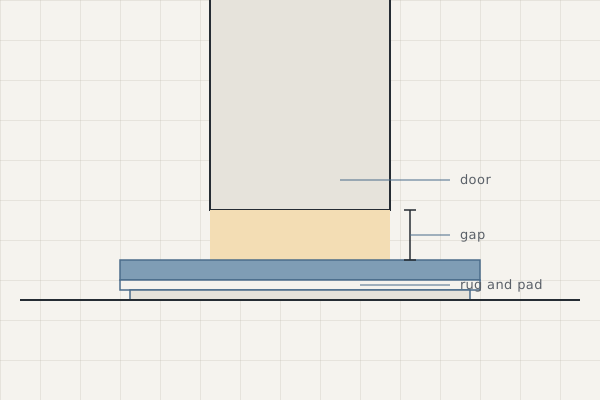
If a nearby door passes over the rug, open it through its full swing with the pad in place. A door that brushes, gathers, or lifts the rug has failed this check, even if it can be forced open.
Tape establishes the footprint, so it is useful before ordering. It cannot show curling, movement, or the finished height. After installation, inspect the edges, check the door, and try your normal bedside route in the footwear you use at home. Reposition or remove a rug that keeps catching or shifting; do not make stepping around it part of the routine.