 fairfits.co
article · bedroom rugs · 10 min read
What size rug goes under a full or queen bed?
A rug can make a modest bed feel settled, but most of it will disappear underneath. A larger rug is the forgiving queen option; a smaller rectangle turned crosswise can suit a full or a slim queen if it leaves enough exposed rug at the sides and foot.
Start with what you want to see
For a queen, start with the larger partial placement below when you want rug beneath your first step out of bed as well as beyond the foot. For a full, or a queen with a slim frame, try the smaller rectangle crosswise. These are editorial starting points: the assembled frame and where you step out decide whether either works.
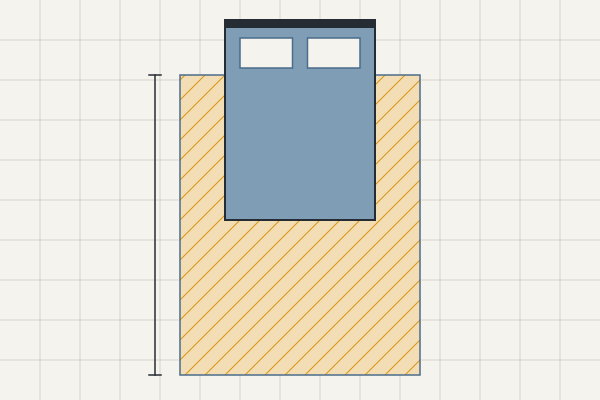
Both arrangements can put the same rug span across the bed. The larger rectangle buys depth toward the head, which matters when the smaller one stops below where your feet land.
Most of a rug under a bed disappears. What earns its place is what stays visible: the exposed band softens the frame’s edge and gives your feet somewhere to land. Choose that band at the walking sides and foot before settling on the rug.
For a queen, this page uses the editorial range below. It is a decorating convention rather than a clearance rule: enough rug should show that it feels intentional, not as if the bed happened to catch the edge.
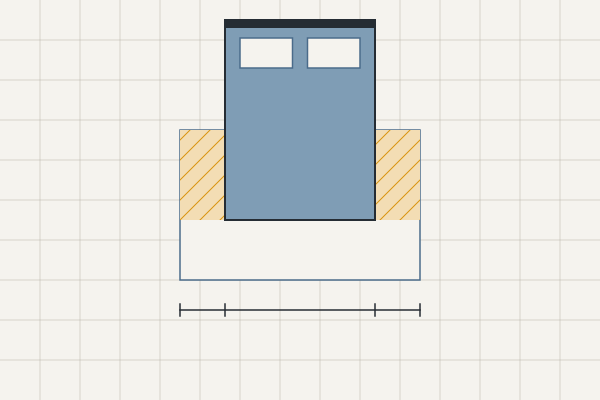
A full can live comfortably with a little less. The range below is a compact editorial option, not a ceiling: the same crosswise rug leaves more exposed beside a narrower bed.
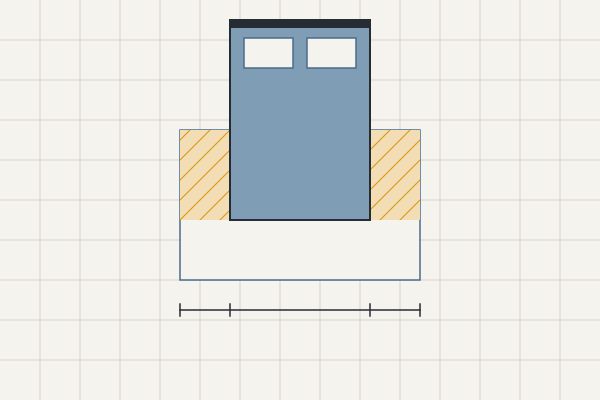
Once you know how much rug you want to see, the size becomes much easier to judge. Add that margin to both walking sides of the bed. That is the width the room is actually asking for. The exposure guide goes further into choosing that margin.
Turn the rug before you buy a bigger one
Rugs are wonderfully indifferent to which edge the store calls the width. Turn the long side across the bed and more rug reaches the bedsides.
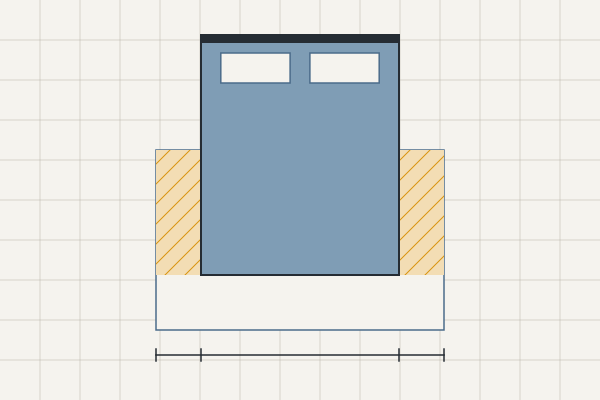
Check the side exposure by subtracting the bed’s outside width from the rug dimension that runs across it, then dividing what remains between the walking sides. This is editorial working with a centered bed:
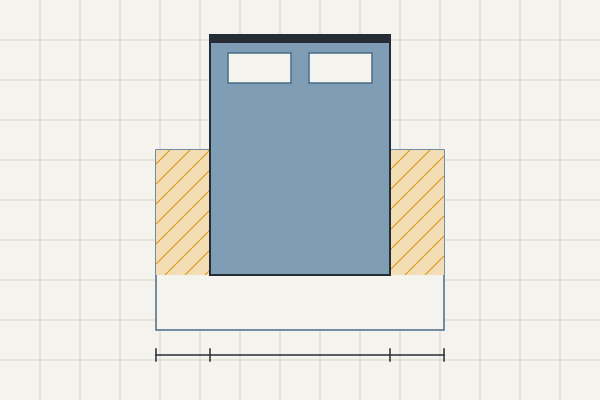
A wider frame uses up that margin. The next example assumes a wider outside frame, and the exposed band falls below this page’s queen target:
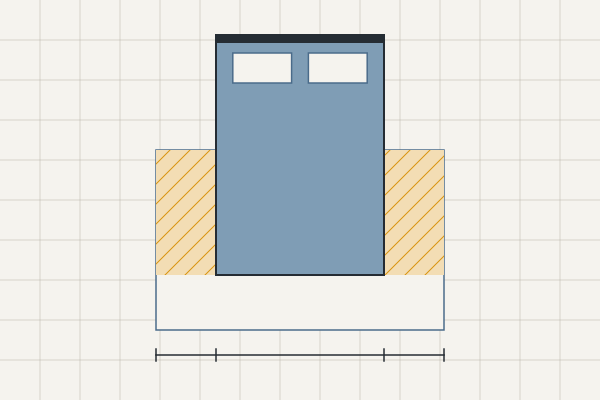
For a full, use the same calculation. The narrower outside frame assumed below leaves a more generous band:
The move is especially good with partial placement. Let the rug begin below the nightstands, where it can stop pretending the hidden floor matters, and spend its area where you actually see and use it: beside the bed and beyond the foot.
The short edge still has to cover the part under the bed and the part beyond its foot. Subtract the foot exposure you want from that edge; what remains is how far the rug can reach underneath. This editorial example spends some of a smaller rug on the floor beyond the foot:
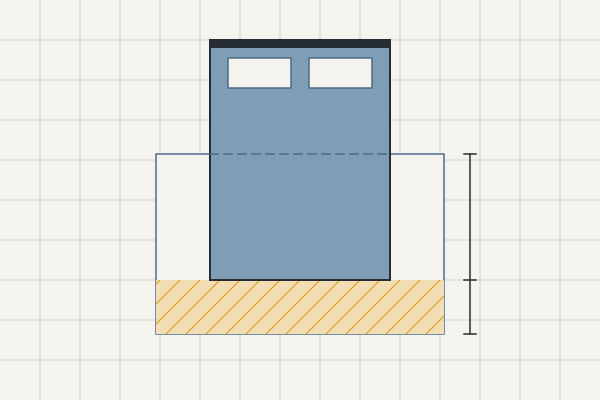
If that head edge falls below where your feet land when you get up, the crosswise move has saved rug at the cost of the place you wanted it. Choose more depth, or accept that it chiefly warms the lower bedsides and foot.
A queen can ask for more rug
A larger rug earns its extra area when it reaches the part of the bedside where you get up. Prefer the deeper placement shown at the start of this page when the smaller crosswise rectangle leaves that landing bare.
The extra depth lets the rug start closer to the head and still reach beyond the foot. It does not add side exposure when the span across the frame stays the same. A substantial frame still needs a wider rug if it consumes the side bands.
The larger footprint spends more of the room on rug. Prefer it when that gives you a useful landing beside the head of the bed; choose the smaller crosswise option when the lower bedsides and foot are enough.
The rug still lives where you walk
The prettiest part of the rug is also the part your feet have to cross.
That exposed strip beside the bed sits inside the same floor the room needs for circulation. The bedside band still has to preserve 24″ of usable space, even when part of it is soft underfoot.
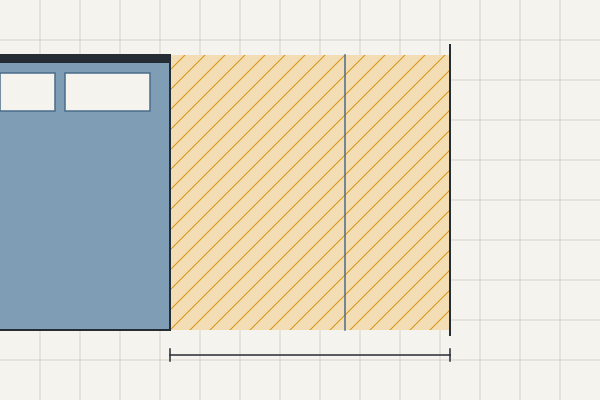
A flat rug can share the walkway almost invisibly. Thick pile, a curled corner, or a raised edge can catch your feet even when the band is wide enough. The rug-pile guide checks the pile, backing, and pad together; judge that finished surface as well as the footprint.
Tape the outline on the floor before you buy. Then walk beside the bed the way you actually do, half awake, carrying laundry, reaching for a nightstand. Check the bedroom walking space before treating the exposed rug as spare floor.
Measure the frame, not the mattress
A queen mattress is not necessarily a queen-sized object.
Bed frames can push past the mattress with upholstered rails, platform edges, footboards, or simply a more generous silhouette. Every extra bit of frame takes the same amount away from the rug you expected to see.
So 53 × 75 in and 60 × 80 in are starting points, not rug measurements.
Measure the assembled bed at its widest point. Do the same at the foot if the frame extends beyond the mattress there. The frame-size guide shows why the mattress name can conceal a larger footprint. Then judge your rug from those edges outward.
A substantial upholstered frame consumes more of the rug than a slim platform sold for the same mattress.
Mark the rug’s head edge as well as its outer sides and foot. Check where both sleepers step out, then choose the orientation that puts the exposed rug there.