 fairfits.co
article · sectional rugs · living room layout · 7 min read
What size rug goes under a sectional?
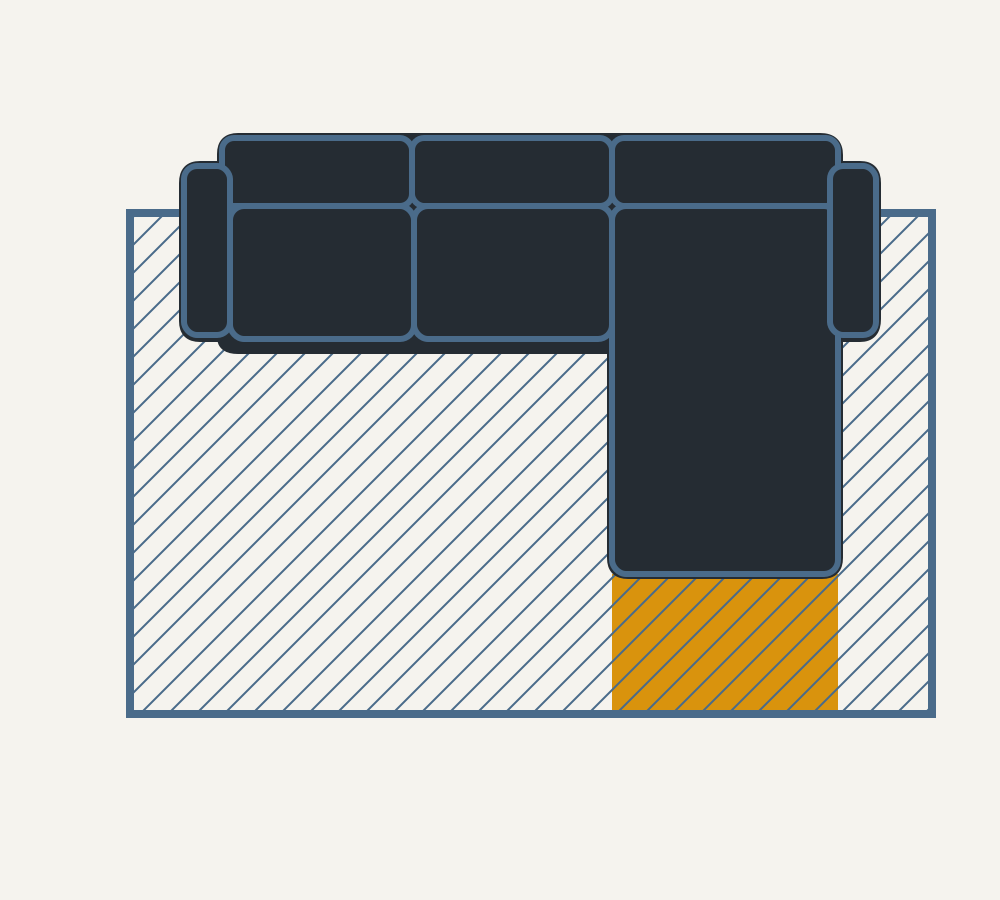
The chaise gets the comfortable seat and the casting vote on the rug. Choose a rectangle that reaches beneath the seating fronts along both parts of the L, then check what remains beyond the chaise and beside the room’s route.
Follow the whole sectional
Start with the sectional in the position you intend to keep. Measure its overall width across the back and its full depth to the chaise tip, including any upholstery that projects beyond the base. Seat depth alone misses the extension that makes this decision different from sizing a rug for a straight sofa.
The familiar front-legs-on arrangement can work here too. Trace the seating front around the L: the rug should support the front feet along the main run and the supports near the chaise’s forward end. With a plinth base, check where the base bears on the rug. A corner caught beneath a foot is not a settled placement.
Prefer a rug that also shows beyond the chaise upholstery. Feet can be inset far enough that they sit on the rug while the chaise still overhangs its edge. That may support the furniture, but it does not give the chaise the visible margin this arrangement is aiming for. Mark both the supports and the outside outline before choosing a size.
Compare the width before the label
Run the rug’s longer side parallel to the sectional’s back as a starting arrangement. The sofa rug guide explains the side-margin convention; apply it across the full sectional width, including the chaise-side arm. It is a design convention, not a building requirement.
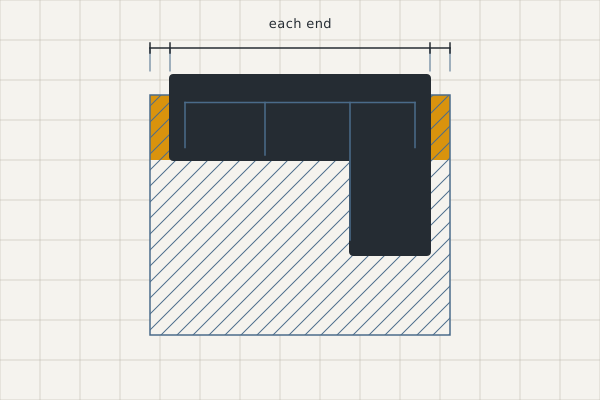
Here is an editorial working with an assumed sectional and exact rug rectangles. These are example dimensions, not a named product or a universal sectional size.
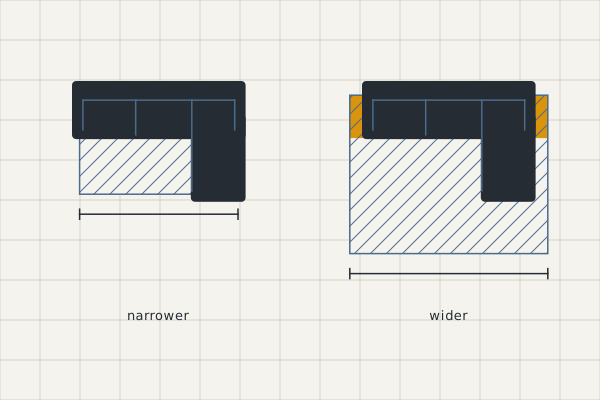
The smaller rectangle cannot reach past both outer ends. Sliding it toward the chaise merely transfers the shortage to the opposite arm. The larger one clears this width check, but its depth and position still need testing. Substitute your sectional’s outside width and the selected rug’s stated dimensions; the size category is only a shopping label.
Let the chaise set the depth check
Mark the rug’s proposed rear edge beneath the sectional, behind the front supports. Measure from that line to the chaise tip. This is the depth the rug must cover before any visible margin appears beyond the chaise.
Continue the same editorial working with an assumed chaise depth and rear-edge position:
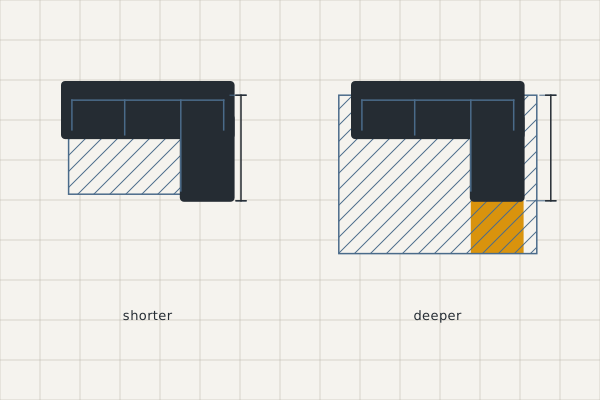
Replace both assumptions with your measurements. The larger rug’s remaining field can hold the coffee table and connect another chair, but that much exposed rug is an outcome of this example, not a recommended chaise margin. Move the outline and see what the room can use, keeping the supports securely inside it.
Putting every leg on the rug is another valid choice. It requires coverage beneath the rear supports as well, and spends more rug behind the seating. Prefer it for a freestanding sectional when the surrounding rug makes the whole group read clearly; against a wall, front-legs-on often puts more of the purchased area where you can see and use it. Check the entire base, including intermediate feet, for stable support.
Keep the route past the chaise usable
A rug can share the walking route. Its edge is not a wall, and crossing it does not automatically make the rug too large. Measure the clear passage between the chaise’s outermost edge and the nearest furniture or wall opposite.
Aim for approximately 36″ of continuous clear passage on the main route. The tighter 30″ reference describes an unobstructed single lane. These are FairFits’ room-planning references, not a certification of accessibility.
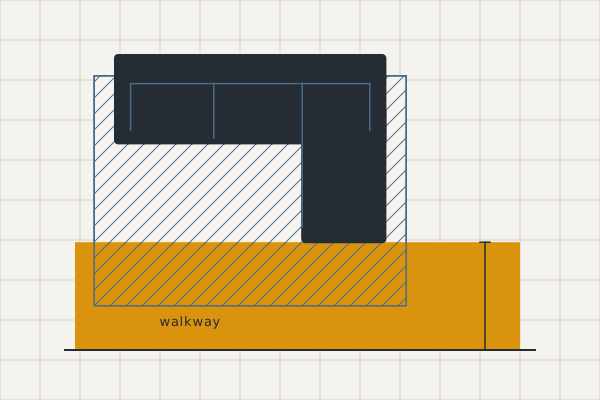
Check the floor covering separately. A curling corner where you turn around the chaise, or an edge that shifts underfoot, needs attention even when the furniture leaves enough width. Include the intended pad and test nearby doors over the installed combination; pile height alone does not establish total thickness. The rug-and-walkway guide takes that check further.
If you move the sectional to improve the rug’s position, measure the passage again. A more generous rug margin cannot repay a narrower route to the door.
Choose what the larger rectangle brings
A sectional already draws a strong boundary around its seats. A rug extending beneath both parts can connect that enclosure to the coffee table and a separate chair, giving the group a shared ground. The cost is less visible floor and a larger area of color or pattern.
Prefer that broader field when the furniture otherwise looks disconnected. Where the sectional already dominates, a quieter rug close to the floor’s tone can make the same useful footprint less emphatic. A strong border does the reverse: it makes the rectangle legible, including any awkwardly cropped margin at the chaise. Judge the exposed pattern with the furniture in place.
Tape the candidate’s actual outline, mark the supports, and place the coffee table where you can use it. Walk to every seat and through the room. In the rug hub, enter the side running across the sectional as the rug width. Keep the separate chaise-depth check beside it when you shop.