 fairfits.co
article · sleeper sofas · living room layout · 6 min read
Does a sleeper sofa fit a small living room?
Having someone stay should not mean putting the living room out of service. A sleeper sofa earns its place when the bed opens fully, the coffee table has somewhere to go, and your guest can still reach the door.
Start with the sofa you will live with
A sleeper fits when the room works during the day, overnight, and while you unfold it. Start with its closed outside dimensions, the approach to the seats, and the route past the furniture. The sofa-size guide works through that floor budget.
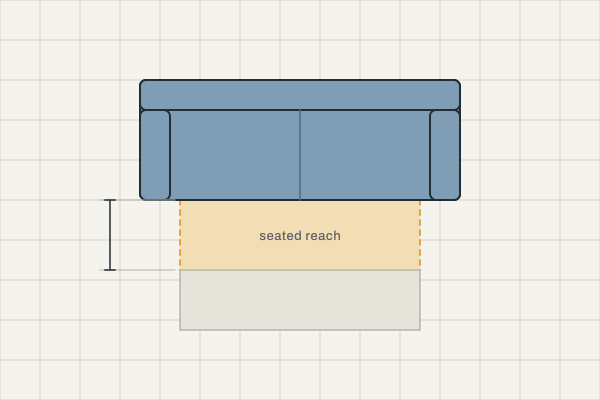
For the closed sofa, the coffee-table reference is 16″ to 18″, measured between the nearest edges. That gap serves seated reach and legs. It is not the passage to keep beside an open bed.
Try sitting on it if you can. Guests may use the bed occasionally; you use the sofa every evening. Compare usable seat width too, since broad arms spend some of the outside width.
Measure the whole open bed
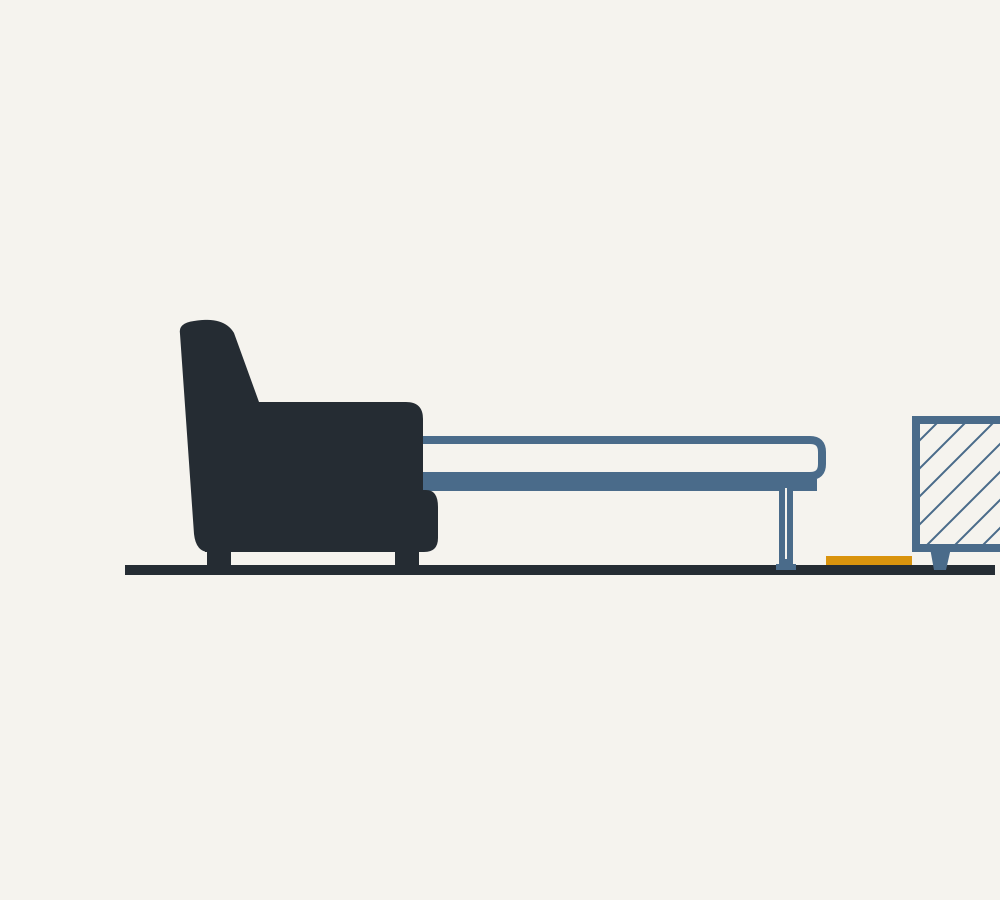
Ask for the exact model's fully open outside footprint. Mattress length alone leaves out whatever frame or sofa body extends beyond it. Confirm the drawing's endpoints: a projection measured from the sofa front is not the same as total depth measured from its back. Do not add the closed depth to a dimension that already includes it.
Measure from the sofa's intended rearmost edge to the nearest obstruction opposite. Account for any required rear gap when choosing that starting line. Subtract the full open depth to find the strip left at the foot.
Here is an editorial working with an assumed usable span and open depth, not a recommended sleeper size.
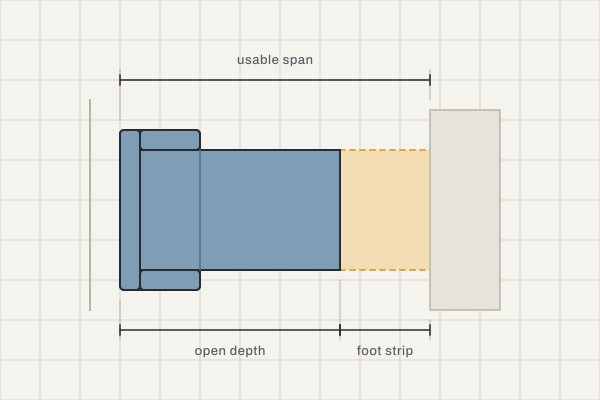
Substitute your room's usable span and the maker's full open measurement. This checks one line through the room; the open width, access beside the bed, and the route beyond it still need checking.
Where the main route passes the foot, aim for 36″ of continuous clear passage. The tighter 30″ reference describes an unobstructed single lane; it is not permission to squeeze that lane between projecting furniture.
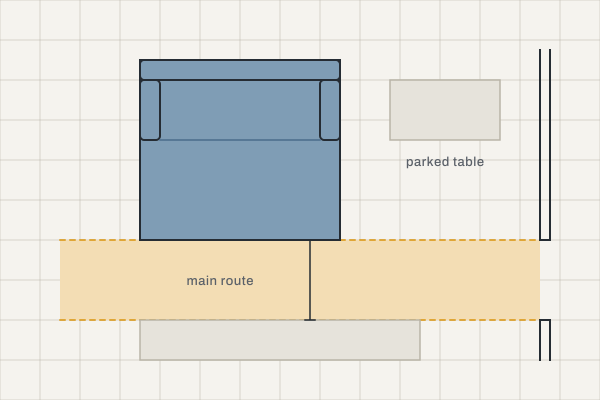
If the route runs beside the bed instead, measure it there. Trace a guest's trip from the sleeping surface to the room door and onward to the bathroom. A clear strip that ends at the parked coffee table does not complete the route.
Give the coffee table an overnight place
“Move the table” is only a solution once you know where it goes. Mark its parked footprint as carefully as the bed's. Include the removed cushions and a guest's bag; none belongs in the passage you just measured.
For occasional visitors, favor a table you can comfortably move over shrinking a sofa you enjoy. This editorial preference has a daily cost during the visit: clear the top, move the table, and put it back. A heavy stone table or a storage table full of belongings makes that bargain less appealing.
A pair of smaller tables can divide the moving job and repeat a material or curved outline elsewhere in the room. The trade-off is a less continuous tabletop and more separate bases to accommodate. Check both parking places before calling the pair more flexible.
Try the move with the room furnished. If the table only fits in front of the door, choose another table, another arrangement, or another sleeping solution.
Check the changeover as well as the result
A bed can fit once open and still be awkward to unfold. Read the operating instructions for the exact mechanism: which parts move, whether the sofa needs rear clearance, where you stand, and which cushions come off. Allow access to any bedding storage before the open bed covers it.
There is no universal opening allowance for sleeper sofas. The following is an editorial check sequence, not a clearance standard.
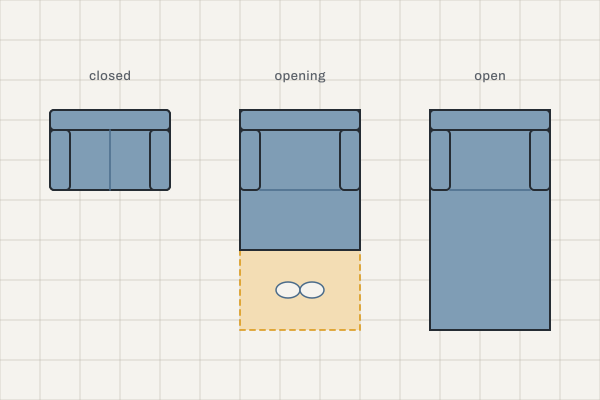
Open the room door through its actual swing with the bed laid out. Use the real leaf and projecting handle, not a nominal doorway width. Keep the door usable overnight; closing it before unfolding the bed does not settle the question.
For frequent guests, give an easy changeover real weight. A larger closed sofa with a straightforward mechanism may serve you better than a compact one that needs several pieces moved. It earns that preference only if both arrangements and the route work.
Take the room measurements shopping
Keep the closed dimensions, open footprint, rear requirement, and table's parked position beside each candidate. Ask for missing measurements before ordering. Compare the sleeping surface separately; try lying down and operating the mechanism where possible.
If no sleeper leaves a workable route, test an air mattress in the same plan. Account for its inflated footprint, storage, and the work of inflating and packing it away. It still occupies floor while someone sleeps.
Use the sofa checks below for the closed arrangement and check the delivery route before buying. The calculator does not simulate a sleeper opening. Leave the open-bed outline and table's parking place taped out long enough for someone else to walk the overnight route.