 fairfits.co
article · wardrobe clearance · 5 min read
How much clearance does a wardrobe need?
A wardrobe can hold all your clothes and still make getting dressed awkward. Check the floor for standing and reaching, then trace the actual doors and test whether the route past them survives.
Leave room for the person using it
Start with 31½″ in front of the wardrobe as the rule's standing-and-dressing reference. Below it, the opposing furniture crowds the place where you stand, bend, and reach for clothes. It is not a promise that a door can open into that same floor without affecting you.
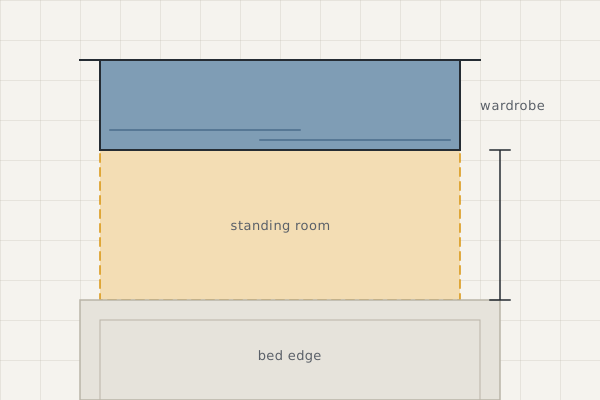
The rule's lower tier comes from a dressing activity study. Its 48″ tier comes from an accessible clear-floor-space reference, not a larger version of the same study. That depth alone does not establish accessible storage: the rest of the space, approach, and reach still matter.
Measure to the nearest obstruction, including the bed frame rather than only the mattress. Keep a laundry basket out of the measured strip while trying the doors and reaching the lowest shelf. If the basket normally lives there, give it a real home in the plan.
Hinged doors spend floor that sliding doors do not
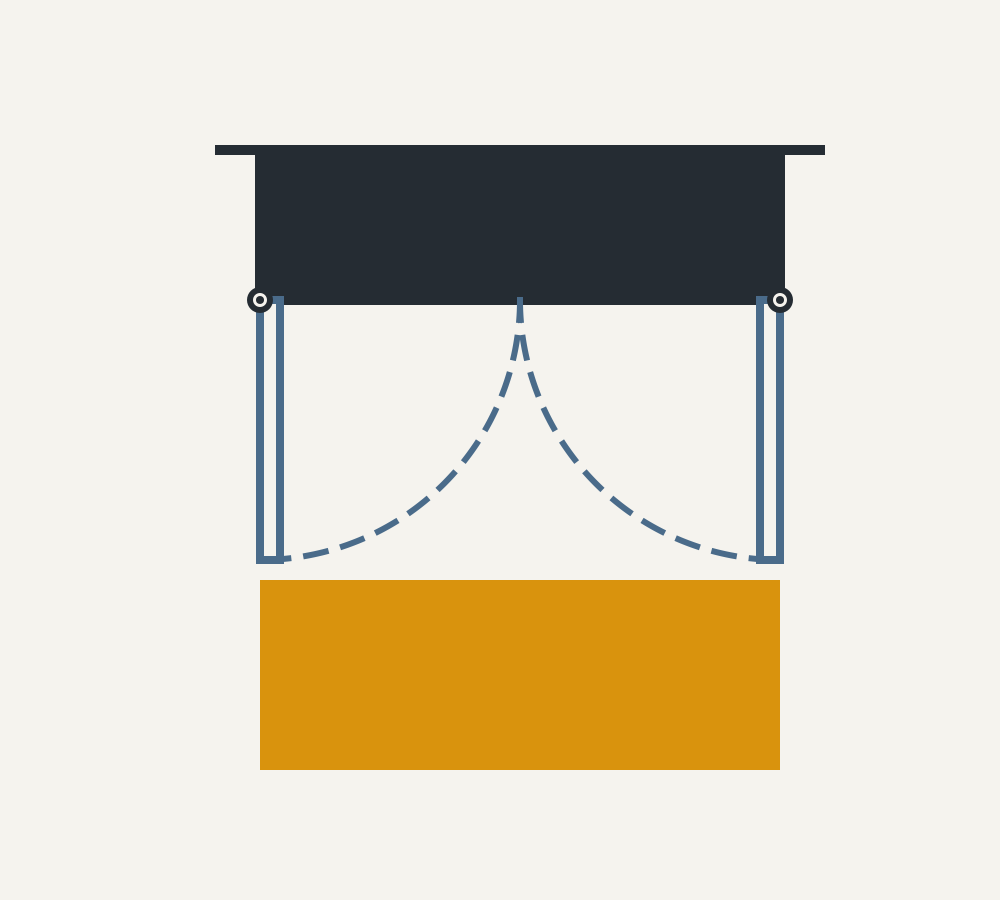
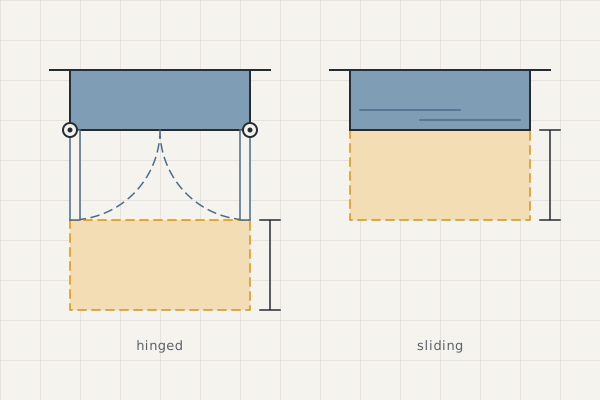
A hinged wardrobe leaf sweeps its own width from the hinge. Use the actual leaf and hardware, not the room-door reference widths in the rule set, and check the opening angle the maker requires for internal drawers or pullouts. A door that opens partway may still prevent the storage behind it from working.
A sliding front removes that outward sweep. It does not remove your standing room, and overlapping panels may leave only part of the cabinet accessible at a time. Ask how wide the opening is with the panels fully moved; check that against the internal drawers and the belongings you need to lift out.
The comparison below is editorial: it separates the moving door from the floor for its user, without assigning either wardrobe an invented size.
That is a conservative layout choice, not a new minimum added to the rule. Some hinged arrangements let you stand between the open leaves. Rehearse the whole motion in that position rather than assuming the empty patch left on paper is usable.
Prefer sliding fronts when a bed leaves little room for opening leaves, provided the usable opening suits your storage. Hinged fronts may expose more of the contents together, but their movement needs floor. A broad closed front can hide a busy collection of clothes; it also gives the wall a large, uninterrupted face. Judge that trade with the doors shut as well as open.
Keep the room door out of the negotiation
A wardrobe tucked beside the entrance can pass the closed-footprint check and still collide with the bedroom door. Trace both sweeps from their actual hinges, including handles, and try the sequence you would use to enter, open the wardrobe, and leave.
The bedroom door-swing guide shows why the leaf width, not the clear doorway opening, sets that trace.
Prefer a position farther along the wall when it keeps the entrance usable while someone dresses. That may cost space for a bedside surface or put the wardrobe in a more prominent view. Recheck the bed approach and the remaining walking strip after moving it. A tidy-looking corner is not worth a routine that requires another person to close a door before you can enter.
Check the route with the wardrobe occupied
When the main route passes the wardrobe, aim for 36″ of continuous passage at its narrowest point. The tighter 30″ reference describes an unobstructed single lane; it is not blanket approval for a corridor hemmed in by furniture. Below that tighter tier, passing the storage becomes a squeeze.
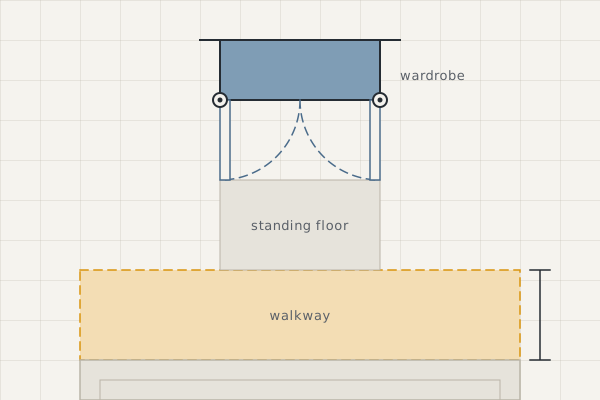
As an editorial planning choice, standing floor and passage can serve in turns when nobody needs them together. The cost is an interrupted route while someone dresses. If that would block another person's ordinary access, choose separate floor for the activities or another wall.
Measure the wall-to-obstruction span, subtract the wardrobe's full installed depth, and mark the remainder. Include any rear gap the installation requires. Tape the leaf movement inside that remainder, try reaching the contents, and have someone walk past in the condition you actually need.
Leave the door outlines marked until you have tried a normal morning at the wardrobe.