 fairfits.co
article · TV viewing distance · 6 min read
How far should you sit from a 65-inch TV?
A large screen can earn its place without sending the sofa to the back wall. Start with the distance from your seated eyes to the screen, then check what that position leaves for the people moving through the room.
Start with a range you can try
For the screen size in this question, this page uses the following starting band. The editorial calculation applies FairFits’ sourced viewing ratios to the diagonal.
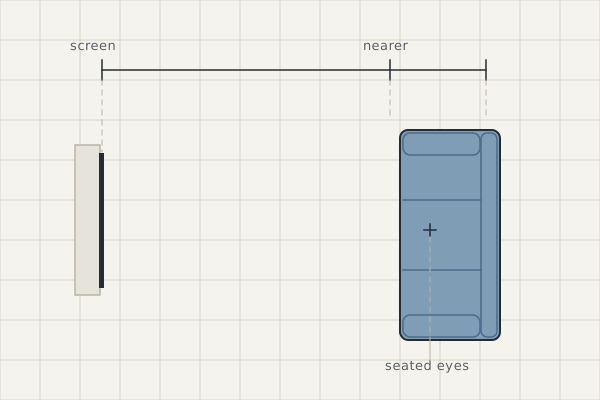
Closer, the picture occupies more of your view. Farther away, it becomes a smaller part of the room in front of you. Start within the band and try the programs you actually watch; the right place for a subtitled film may not be your favorite place to follow a game.
The endpoints come from different kinds of guidance. Samsung supplies the nearer diagonal multiplier for an immersive view. FairFits’ farther multiplier is a rounded conversion of the ITU’s design distance for assessing high-definition images. Those references inform a planning range; neither establishes your preferred seat.
Higher-resolution screens can reveal fine detail from closer positions. The ITU’s resolution-testing distance is not a command to move your sofa forward, and the far end of this page’s band is not a boundary beyond which the picture stops working. Try the view before using either endpoint to rearrange the room.
Measure to your eyes, not the sofa’s front
A wall-to-wall measurement includes space neither the picture nor your eyes occupy. The television sits forward of its wall; your head sits forward of the sofa’s back. A route behind the sofa uses more of the same room length.
Sit as you normally would, with the cushions taking your weight. Have someone locate your eye position along the floor, then measure to the screen plane. Measuring from the front edge of the seat gives you a furniture gap, which is a different quantity.
For a straight-on arrangement, you can also work backward from the room. This editorial example assumes parallel walls, a sofa facing the screen, and a passage behind it.
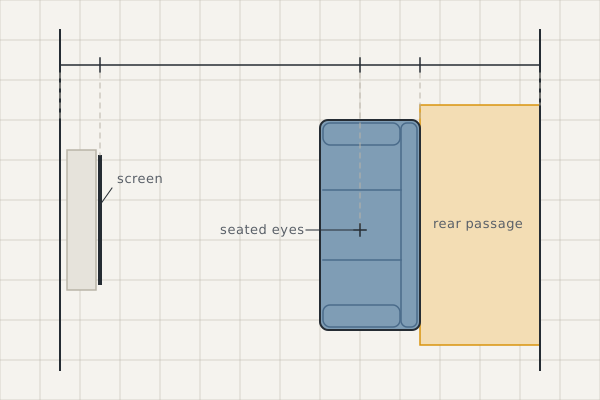
Substitute your own measurements, including the occupied seating position. The eye offset is an assumption about this example, not a standard sofa dimension. A different back cushion or a reclined posture changes it.
The sofa’s full outside depth still matters for the floor plan. Use it to locate the front edge and check the coffee table or passage there. Subtracting the entire sofa depth cannot, by itself, tell you where your eyes will be.
Change the part that moves the screen
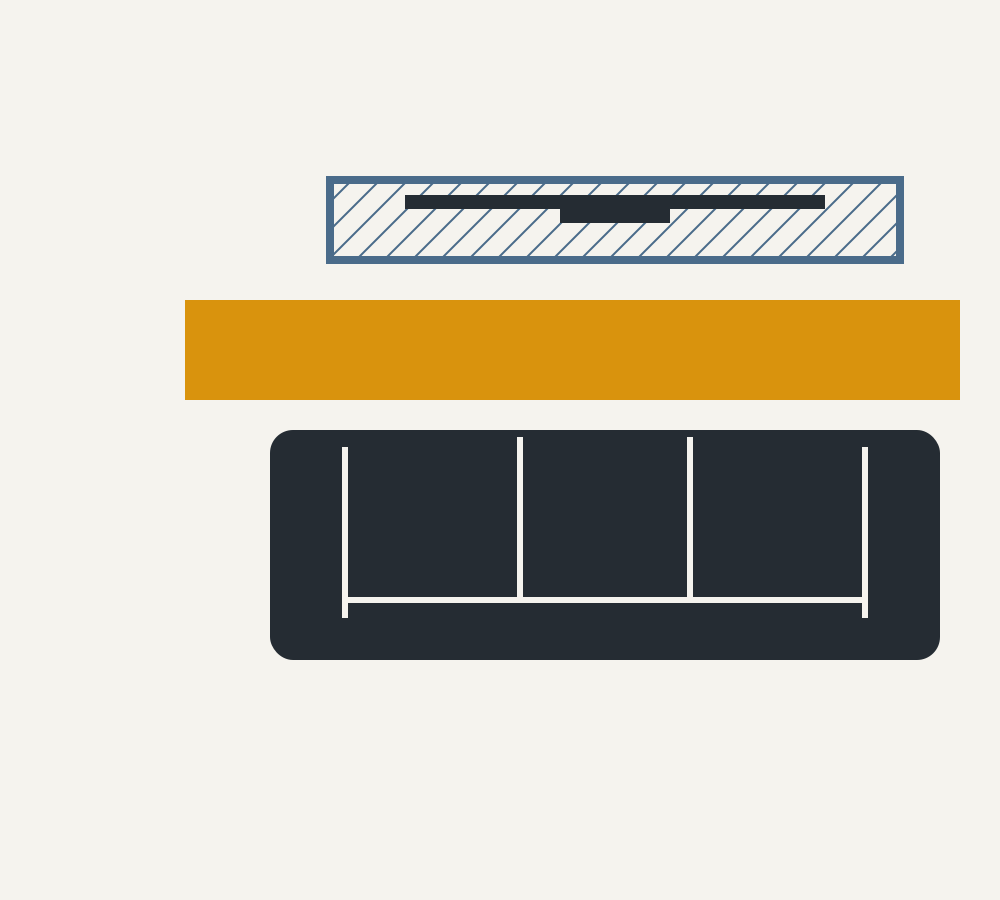
If the view feels too close, check what holds the screen forward before pushing the sofa into a route. A shallower console helps viewing distance only if it lets the television itself sit farther back. Check the television’s base and the maker’s placement requirements before moving it toward the rear of the top.
A wall-mounted screen separates those decisions. A deep cabinet beneath it still takes floor, but its depth does not determine the screen plane. Replacing that cabinet with a shallower one can release floor without changing the view at all.
That distinction gives the cabinet a fair hearing. Keep useful concealed storage when its footprint works; choose a shallower piece when the floor in front needs the space more. The TV-stand guide covers the support, width, and depth checks. Here, measure the screen again after any proposed change.
Let the view cross a studio’s zones
Viewing distance does not have to sit entirely inside the rug that marks the seating area. In a studio, the screen can face the sofa across the shared walkway, allowing the same stretch of room to serve circulation and the view.
That can preserve a useful separation between sleeping and sitting, as the studio-zoning guide describes. It also has a cost: someone using the route may cross the picture. Prefer this arrangement when occasional interruptions are acceptable. If the route is busy whenever someone watches, try a position with circulation behind or beside the seating.
Keep the main route to the site’s primary-walkway guidance.
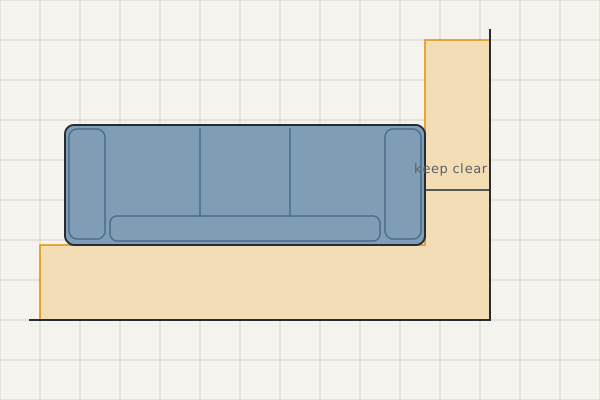
Moving the sofa backward to reach the far end of the viewing band can narrow that route. Stop where the passage needs its floor; a more distant picture does not compensate for having to turn sideways behind the seat. In the worked example, the nearer viewing position preserves the recommended rear passage.
Try the seat before fixing the layout
Mark the screen plane and the sofa’s full footprint. Sit at the intended eye position, check subtitles and reflections, and look from the other seats people will use. A plan measured from the center seat does not establish a good view from the armchair.
Have someone walk the normal route while you watch. Open the nearby door and extend any recliner. If the view works only while everyone stays still, change the arrangement and measure again.
Keep the position that gives you a view you enjoy and a route people can use. Record the screen plane, sofa-back position, and rear passage before ordering or mounting anything.